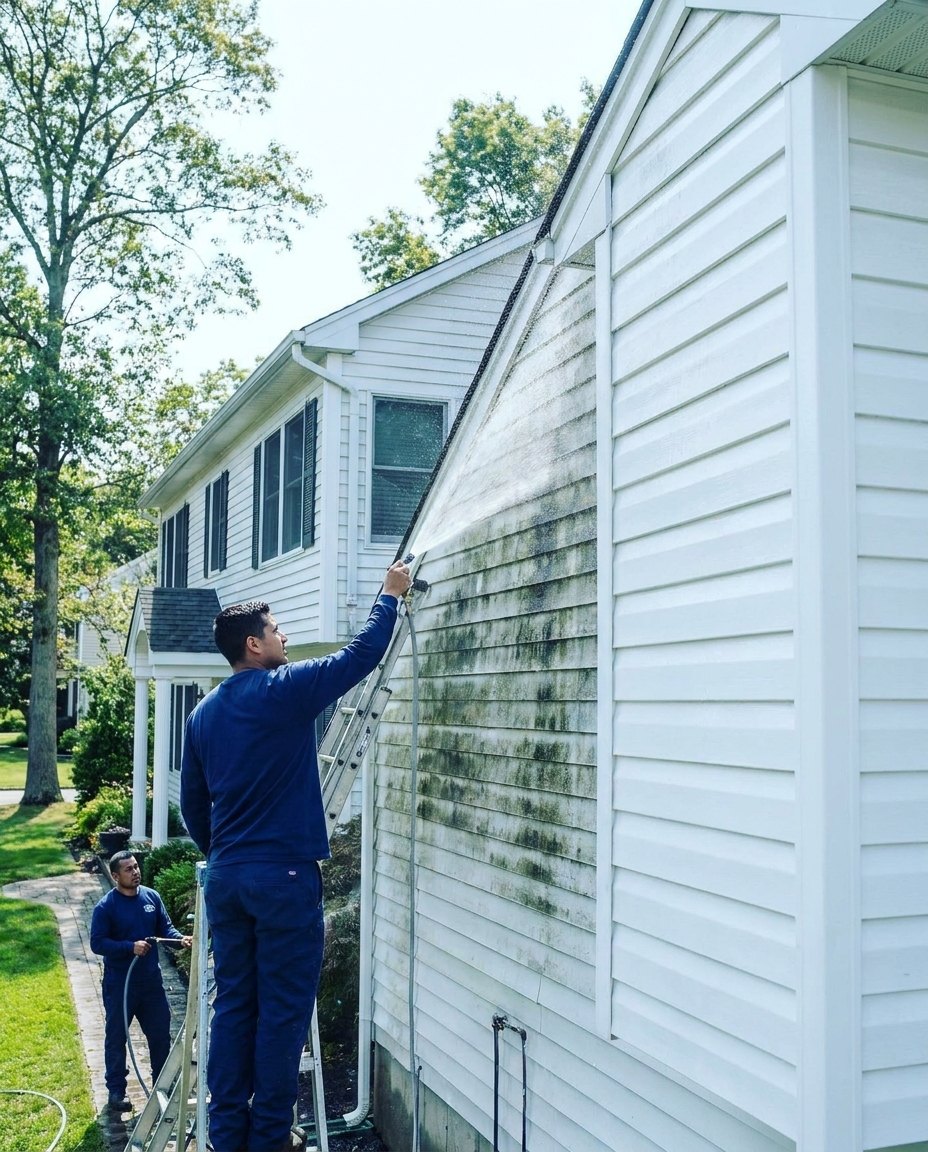
Soft washing and pressure washing sound similar but do very different jobs. Here is how to know which one your Long Island home actually needs, surface by surface.
- Pressure washing cleans with force (high-PSI water); soft washing cleans with low-pressure water plus specialized cleaning solutions.
- Soft washing is the safe choice for roofs, vinyl and stucco siding, painted wood and screens; pressure washing suits concrete, brick, pavers and unsealed masonry.
- The green and black stains common on Long Island's North Shore are algae and moss, which soft washing kills at the root instead of just blasting off the surface.
- Wrong method or wrong pressure can void a roof warranty, force water behind siding, or gouge wood, so matching the method to the surface matters.
- Most Long Island homes need a mix: soft wash the house and roof, pressure wash the hardscapes.
What each method actually is
Pressure washing (sometimes called power washing when the water is heated) cleans by force. A pump pushes water through a narrow nozzle at high pressure, typically anywhere from about 1,300 to over 3,000 PSI, and that mechanical force is what strips away dirt, mildew and grime. It is fast and effective on hard, durable surfaces, but the same force that cleans concrete can carve grooves into soft wood or drive water up under vinyl siding.
Soft washing flips the priority. Instead of relying on pressure, it relies on chemistry. A professional applies a low-pressure spray (often below 500 PSI, closer to the force of a garden hose) carrying a cleaning solution, usually a mix of a diluted sodium hypochlorite based cleaner, a surfactant and water. The solution does the work: it dwells on the surface, kills algae, mold, mildew and bacteria at the root, and then gets rinsed away gently.
The short version: pressure washing blasts the surface clean, soft washing treats the surface clean. That difference is the whole decision, because it determines both what gets removed and what the method can safely touch.
Long Island's climate decides a lot of this for you
Long Island is humid, and humidity plus organic growth is the core cleaning problem here. On the North Shore, heavy tree cover keeps roofs and north-facing walls shaded and damp, which is exactly what moss, algae and lichen want. Those black streaks on a roof and the green film on siding are living organisms, not just dirt. If you only blast them off, the roots stay and they come back within a season. Soft washing kills them, so the clean lasts longer, often a year or more.
On the South Shore, salt air and near-constant humidity coat surfaces with a fine grime and accelerate mildew, especially on decks, railings and the shady sides of the house. After a nor'easter or a stretch of summer storms, you also get windblown debris and organic staining. Again, most of this responds better to a solution that dissolves and kills growth than to raw pressure.
The four seasons add wear too. Freeze-thaw cycles in winter open tiny cracks in concrete and mortar, spring pollen cakes onto everything, and summer humidity feeds mold. Knowing what you are actually fighting, living growth versus loose surface dirt, is the fastest way to know which method belongs on which surface.
Surfaces that need soft washing
Your roof is the clearest case. Asphalt shingles, which cover most Long Island homes, should never be pressure washed. High pressure knocks off the protective granules, shortens the roof's life, and many manufacturers will void the warranty if the roof is power washed. The Asphalt Roofing Manufacturers Association specifically recommends low-pressure cleaning methods. Soft washing removes those black streaks (usually Gloeocapsa magma algae) and moss without touching the granules.
Vinyl and aluminum siding, stucco, EIFS, and painted wood should also be soft washed. Vinyl seems tough, but high pressure can crack it, force water behind the panels into the wall cavity, and leave streaks. Older homes with wood clapboard or cedar shakes, common across the Island, are especially vulnerable to gouging and lifted paint. Screens, window frames, soft soffits, and outdoor light fixtures round out the soft-wash list.
A good rule: if the surface is part of the building envelope, is painted, is delicate, or is above your head, assume soft washing until a pro tells you otherwise. The goal there is to protect the material, not just clean it.
Surfaces where pressure washing is the right call
Hard, dense, ground-level surfaces are where pressure washing earns its keep. Concrete driveways, sidewalks, patios and pool decks, brick, natural stone, and unsealed masonry can all take the force, and often need it. Ground-in dirt, tire marks, rust, and the black grime that builds up in concrete pores usually will not lift with a gentle rinse.
Pavers and stone patios are a common Long Island project. Pressure washing clears the moss and weeds from the joints and brings back the original color, though the sand between pavers may need to be replenished afterward. Decks are a middle case: pressure washing works on wood and composite decking, but only at a lower pressure and a wide fan tip, held at a safe distance, to avoid furring the wood grain. Many pros will actually soft wash a deck instead for exactly that reason.
Even when pressure is appropriate, technique matters more than raw power. The right nozzle, the right distance, and steady, even passes are what separate a clean surface from a permanently etched one. This is a big part of why the method and the operator both matter, not just the machine.
What each method costs on Long Island
Prices vary with the size of your home, how much buildup there is, access and height, and how the company charges (by square foot, by surface, or a flat project price). As a general range, a full house soft wash on a typical single-family Long Island home often runs somewhere in the low hundreds to around a thousand dollars, with larger or two-story homes at the higher end. A roof soft wash is commonly priced separately and depends heavily on roof size, pitch and access.
Pressure washing a driveway, walkway or patio is often quoted per square foot or as a flat rate, and many concrete jobs land in the low-to-mid hundreds. Deck cleaning depends on size and whether you also want it sealed. Bundling services, for example a house soft wash plus a driveway pressure wash on the same visit, usually costs less than booking them separately, because the crew is already on site.
Be cautious with a quote that is dramatically cheaper than everyone else. It often means no insurance, watered-down or missing cleaning solution (which is really just a rinse that will not last), or an operator who will use too much pressure on a surface that cannot take it. Ask what method they will use on each surface, and whether they are licensed and insured. Premium Services US is licensed and insured and will walk you through the plan surface by surface before any work starts.
How to decide, and when to call a pro
Start by naming the surface and the stain. If it is a roof, siding, stucco, painted wood, or anything overhead or delicate, soft washing is almost always the answer. If it is concrete, brick, pavers, or stone at ground level with ground-in dirt, pressure washing is likely the right tool. If the stain is green, black or slimy, it is biological growth and you want the chemistry of a soft wash to kill it, not just move it around. If it is caked-on mud or tire marks on a hard surface, pressure will clear it.
Most Long Island homes actually need both in one project: a soft wash for the house and roof, and a pressure wash for the driveway, walkways and patio. A good contractor should be comfortable doing each where it belongs rather than pushing one method for everything. The roof in particular is worth protecting, because a warranty and a full re-roof cost far more than a proper cleaning.
If you are unsure, that is exactly the moment to get a professional to look at it. The wrong method is not just a wasted afternoon, it can mean cracked siding, water inside a wall, stripped roof granules or gouged wood. A local team that knows Long Island's algae, salt air and shingle roofs will match the method to the surface the first time. You can reach Premium Services US at (934) 500-2940 or book an estimate online through Cal.com.
Frequently asked questions
Yes. Soft washing is the recommended method for asphalt shingles because it cleans without knocking off the protective granules. Pressure washing a shingle roof can shorten its life and void the manufacturer's warranty.
It can. Too much pressure can crack vinyl, leave streaks, and force water behind the panels into the wall. For siding, a low-pressure soft wash is the safer choice and usually gives a more even, longer-lasting result.
Those streaks are algae, a living organism. If a roof is only rinsed or blasted, the roots survive and regrow, especially in Long Island's shaded, humid conditions. A proper soft wash uses a cleaning solution that kills the algae at the root so it stays gone longer.
For most homes, a soft wash of the siding and roof every one to two years keeps growth under control, and hard surfaces like driveways can be pressure washed as needed. Shaded North Shore homes and damp South Shore properties may need it more often.
Yes, and it is usually the best value. Most homes need a soft wash for the house and roof plus a pressure wash for the driveway and patio, so bundling them in one visit is efficient. Premium Services US handles both and will match the method to each surface.
Rather leave it to the pros?
Premium Services covers all of Long Island. Free, no-obligation estimate.
Pressure Washing near you
Get it done by a local, licensed team.