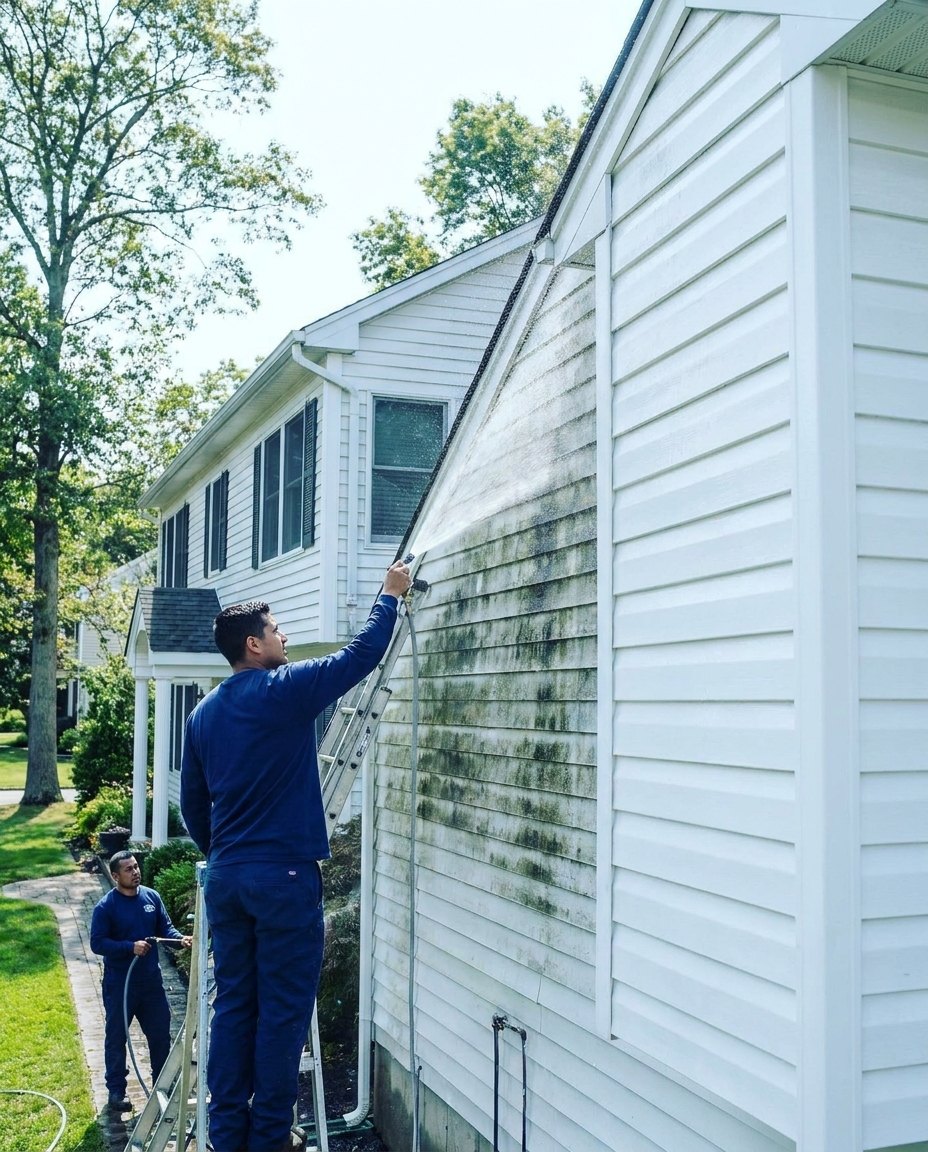
Timing matters as much as technique. On Long Island, the calendar, the weather, and your siding all decide when a pressure wash will actually last. Here is when to book it.
- Late spring through early fall (roughly May to October) is the ideal window on Long Island because temperatures stay mild and surfaces dry quickly.
- Aim for a dry, calm day with temperatures between about 50F and 85F, and avoid washing right before a nor'easter or a hard frost.
- North Shore homes often need washing for tree cover, moss, and green algae, while South Shore homes fight salt air and humidity.
- Most single-family homes benefit from one full exterior wash per year, with a mid-season touch-up if you are near heavy trees or the water.
- House washing usually means low-pressure soft washing, not blasting, which protects siding, paint, and landscaping.
The short answer: late spring through early fall
If you want a single window for Long Island, aim for late spring through early fall, roughly May to October. During these months daytime temperatures typically sit in a comfortable range, the air is dry enough for surfaces to dry properly, and there is plenty of daylight to finish the job. Cleaning solutions also work best in mild weather, so the wash is more effective and lasts longer.
Spring is popular because it clears away everything winter left behind: salt residue, grime, and the first bloom of green algae. Early fall is a close second, since washing before winter removes the organic growth that would otherwise sit against your siding for months under snow and ice. Many Nassau and Suffolk homeowners pick one of these two shoulder seasons and stick with it.
The middle of summer works too, but the hottest weeks come with a catch. On a 90-degree afternoon, cleaning solution can dry on the siding before it does its job, which leaves streaks. If you wash in peak summer, early morning is your friend.
What the weather really needs to look like
The calendar is a guide, but the forecast makes the final call. The ideal day is dry, calm, and mild. Temperatures between about 50F and 85F let cleaning solutions work without freezing or flash-drying. A light breeze is fine, but strong wind blows spray everywhere and makes rinsing uneven.
Give yourself a dry runway. You want the surface to dry after washing, so avoid days with rain in the immediate forecast right after the job. A little rain a day or two later is not a problem and will not undo the clean. What you want to skip is washing into an incoming storm, which is worth remembering on Long Island where nor'easters can stall for a day or more.
Steer clear of the temperature extremes. Below about 45F, water can freeze on siding and walkways, which is both ineffective and a slip hazard. On the hottest days, work in the shade and follow the sun around the house so no wall bakes while the solution is on it.
North Shore vs South Shore: your location changes the answer
Long Island is not one climate, and where you live shifts what your home fights. On the North Shore, mature tree cover keeps walls shaded and damp, which is exactly what moss, mildew, and green algae love. North-facing walls that rarely see direct sun tend to green up first. If you are surrounded by oaks and maples, you may notice growth returning faster and a spring wash becomes close to essential.
On the South Shore, salt air is the main character. Homes near the Great South Bay and the barrier beaches take on a fine film of salt and airborne grit that dulls siding and speeds up corrosion on fixtures and railings. Humidity off the water also feeds mildew. Here a rinse-forward wash that flushes salt off the surfaces pays off, and homeowners closer to the water often benefit from washing more than once a year.
Home style plays a part too. The colonials, capes, ranches, and cedar-shake homes common across the Island each hold dirt differently. Vinyl siding cleans up easily with soft washing, while cedar shake and painted wood need a gentle touch and the right timing so they can dry fully before any cold snap.
Signs your home is asking for a wash
You do not have to guess. Green or black streaks on the siding are the clearest signal, and they are usually algae or mildew rather than plain dirt. Look at the shaded and north-facing walls first, plus anywhere gutters overflow, because those spots grow first and worst.
Check the details most people walk past. Chalky residue that rubs off on your hand, dark spots creeping up from the foundation, a dull film over once-bright siding, and slippery green patches on walkways and patios all point to buildup. Dark streaks below the gutters often mean organic growth is taking hold.
There is also a comfort test. If the exterior looks tired in listing photos, or you apologize for the green streaks when guests arrive, it is time. Catching growth early keeps it from digging into paint and sealant, which is cheaper than waiting until it stains permanently.
How often, and what one wash costs
For most Long Island homes, one thorough exterior house wash per year keeps siding clean and protects it from long-term staining. If you are under heavy tree cover on the North Shore or near the water on the South Shore, a light mid-season touch-up can help, especially on the shaded walls that green up fastest. Driveways, patios, and walkways can be done on the same visit or on their own schedule, since they show dirt at a different pace.
Pricing depends on real factors, not a flat sticker. The size and number of stories, the type of siding, how much buildup has to come off, and whether you add flatwork like the driveway all move the number. As a general range, a standard single-family house wash on Long Island often falls somewhere in the low-to-mid hundreds of dollars, with larger or heavily soiled homes costing more. Always get a specific quote based on your actual home rather than a phone estimate sight unseen.
One more value point: regular washing is maintenance, not just looks. Removing algae, mildew, and salt before it settles in helps siding, paint, and sealant last longer, which protects a much bigger investment than the wash itself. A local, licensed and insured company like Premium Services can look at your siding and exposure and tell you honestly how often your home needs it.
Pressure washing vs soft washing your siding
The phrase pressure washing covers two very different jobs. High pressure is right for hard surfaces like concrete driveways, brick, and pavers, where the force actually lifts embedded grime. On house siding, though, high pressure is usually the wrong tool. It can crack vinyl, drive water behind panels, strip paint, and gouge soft cedar.
For siding, the professional standard is soft washing. It uses low pressure plus a cleaning solution that kills algae and mildew at the root, then a gentle rinse. The result is a deeper, longer-lasting clean than blasting, because you are treating the growth instead of just knocking off the surface layer. Soft washing is also much safer for windows, screens, light fixtures, and the plants along the foundation.
This is a big reason timing and technique go together. A soft wash needs mild weather so the solution has time to work and the walls can dry, which loops right back to that late spring through early fall window. When you hire a pro, ask how they will treat your specific siding, and make sure landscaping gets rinsed and protected as part of the job.
A simple seasonal plan for Long Island homeowners
Here is an easy rhythm to follow. In spring, book your main house wash once the overnight frost risk has passed, usually from April into June. This clears winter salt and the first algae bloom and sets the house up to look its best all summer. Spring also fills up fast with local companies, so scheduling early gets you the date you want.
In summer, watch the shaded and waterside walls, and add a quick touch-up if green is creeping back. Do any peak-summer washing in the cool of the morning. In early fall, roughly September into October, a wash before the cold sets in removes the organic growth that would otherwise sit on your siding all winter and leaves the exterior clean going into the holidays.
In late fall and winter, hold off on siding washing once hard freezes arrive, and shift your attention to gutters and any holiday lighting you want installed. Following the seasons this way keeps your home looking sharp without wasting a wash on the wrong week. If you would rather not track it yourself, Premium Services can set a simple annual schedule for your address; call (934) 500-2940 or book online when your window opens.
Frequently asked questions
Late spring, roughly April through June, is the most popular choice because the frost risk has passed and the wash clears winter salt and fresh algae. Early fall, around September and October, is a strong second for cleaning up before winter.
It is best to avoid it once hard freezes arrive. Below about 45F, water can freeze on siding and walkways, which is ineffective and creates a slip hazard, and cleaning solutions do not work well in the cold. Wait for a mild, dry stretch or push the job to spring.
Most Long Island homes do well with one full exterior wash per year. If you are under heavy tree cover on the North Shore or near the water on the South Shore, a light mid-season touch-up on the shaded walls can help keep algae and salt in check.
High pressure can crack vinyl and force water behind the panels, which is why pros clean siding with low-pressure soft washing instead. Soft washing uses a cleaning solution plus a gentle rinse to remove algae and mildew safely, so your siding gets a deeper clean without the damage.
The price depends on the size and number of stories, the siding type, how much buildup there is, and whether you add surfaces like the driveway. A standard single-family house wash on Long Island often falls in the low-to-mid hundreds of dollars, so it is best to get a specific quote for your home.
Rather leave it to the pros?
Premium Services covers all of Long Island. Free, no-obligation estimate.
Pressure Washing near you
Get it done by a local, licensed team.