Pressure washing prices on Long Island vary a lot depending on the surface, size and how dirty things have gotten. Here is a realistic breakdown of typical ranges and what actually drives the number on your quote.
- Most Long Island homeowners pay somewhere in the low hundreds for a single surface like a driveway, and more when several areas are combined.
- Price is driven by square footage, surface type, level of grime, and access, not just the size of your house.
- House washing (soft washing) and hard surfaces like concrete are usually priced differently because they need different methods.
- Bundling driveway, siding and patio in one visit almost always costs less than booking each separately.
- Always get an itemized, written quote after an on-site or photo review, not just a phone number pulled from thin air.
The short answer: realistic price ranges
There is no single sticker price for pressure washing on Long Island, but there are honest ranges. For a standard two-car concrete driveway, most homeowners typically pay somewhere in the low-to-mid hundreds. A full house wash (the exterior siding of an average single-family home) usually lands higher than a driveway because there is more surface area and more careful work at height. Smaller jobs like a walkway, a set of steps or a modest patio tend to fall at the lower end.
When you combine several surfaces in one visit, for example driveway plus siding plus a back patio, the total goes up but the price per square foot usually goes down. That is why most quotes for a whole-property refresh come in as a package rather than a stack of separate line items at full price.
Treat any number you hear before someone has seen your property as a rough starting point. The real quote depends on what you actually have and how dirty it has gotten, which is what the rest of this guide walks through.
What actually drives the price
Square footage is the biggest single factor. More surface means more time, more water, more cleaning solution and more labor, so a long driveway or a large two-story home will always cost more than a compact ranch. Surface type matters almost as much: concrete, pavers, vinyl siding, cedar shake, brick and composite decking each behave differently and some need gentler methods that take longer.
The level of grime is the factor people underestimate. On the North Shore, heavy tree cover means more green algae, moss and organic staining, which takes extra dwell time and solution to lift. On the South Shore, salt air and humidity encourage that gray-green film on siding and black streaking that needs proper soft washing rather than brute force. A surface that has not been cleaned in five years costs more to bring back than one maintained every couple of years.
Access and setup round out the list. A backyard patio behind a locked gate, a third-story gable, steep steps, or a spot far from a water spigot all add time. Good companies factor these into the quote up front so there are no surprises, which is exactly why an on-site or photo-based estimate beats a blind phone number.
Pressure washing vs. soft washing (and why it affects cost)
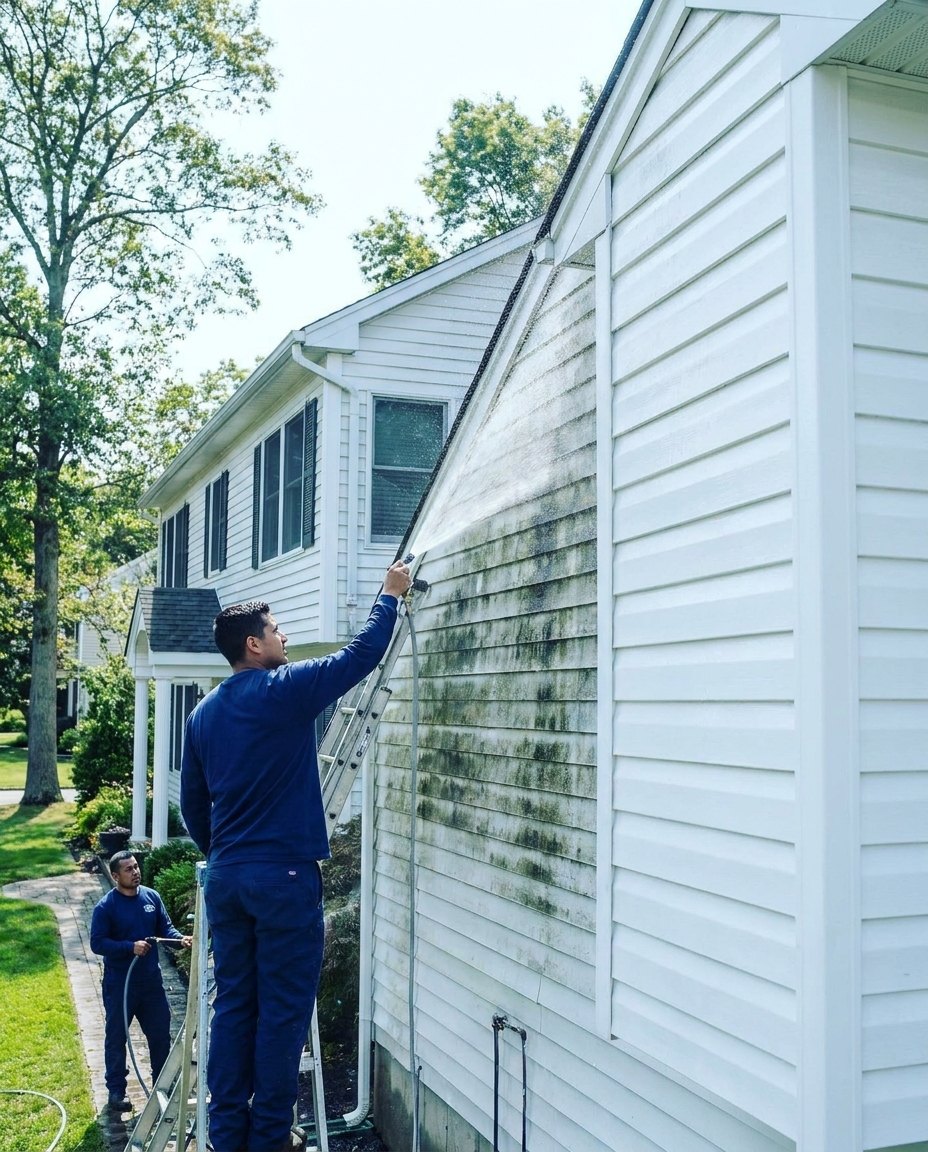
Not everything should be blasted with high pressure. Hard, durable surfaces like concrete driveways, paver patios and brick can usually take true pressure washing. But siding, roofs, painted wood and delicate trim need soft washing, a low-pressure method that relies on cleaning solutions to kill algae and lift grime without forcing water behind panels or stripping the surface.
This distinction shows up on your quote. Soft washing a house is a different line of work from pressure washing a driveway, and combining both on one property is common on Long Island homes with vinyl siding over a concrete apron. A good pro will tell you which method each surface needs and will never high-pressure your roof shingles, which can void manufacturer warranties and cause real damage.
If a quote is suspiciously cheap and the company plans to point a high-pressure wand at everything, that is a red flag. The cost of doing it right, with the correct method per surface, protects the value of the home you are trying to freshen up.
How Long Island seasons and weather change the equation
Long Island's four distinct seasons shape both when you should clean and how much buildup you are paying to remove. Spring is the busiest window, when homeowners want to erase a winter's worth of grime, pollen and the aftermath of nor'easters. Because demand peaks then, scheduling early helps you get a slot before the calendar fills up. Fall is a smart second window, clearing leaf stains and algae before the cold sets in.
Weather also affects buildup between cleanings. The North Shore's shade and moisture grow moss and algae faster, so those homes may need attention more often. South Shore properties battling salt air and humidity see that persistent film return, especially on north-facing walls that stay damp. The longer you wait, the more organic growth accumulates, and heavier growth simply takes more time and product to remove, which nudges the price up.
The practical takeaway is that regular maintenance is usually cheaper per visit than an occasional deep rescue. A home cleaned on a sensible cycle rarely reaches the worst-case, most-expensive condition.
Common surfaces and how they are priced
Driveways and walkways are usually priced by square footage and by how much oil staining, tire marks and algae they carry. A stained or long-neglected driveway takes more passes and pre-treatment than one washed regularly. Paver surfaces may also involve re-sanding the joints afterward, which can be a separate line item.
House washing is typically priced by the footprint and number of stories, since two-story and split-level homes common on Long Island add height and time. Decks and fences are often quoted separately because wood and composite need gentle handling and sometimes brightening. Patios and pool surrounds depend on material, size and how much organic growth has crept into the surface texture.
Because these all vary, the honest answer to "what will mine cost" is a quick assessment. Premium Services and other reputable Long Island companies will look at your specific surfaces, in person or from clear photos, and give you an itemized quote so you can see exactly what each part costs and decide what to include.
How to compare quotes without overpaying
Get at least two written quotes and make sure each one is itemized by surface, so you are comparing the same scope. A single lump sum with no breakdown makes it impossible to tell whether the roof, siding and driveway are all included or just some of them. Confirm what the price covers: pre-treatment, the cleaning itself, any post-rinse, and cleanup.
Check that the company is licensed and insured, which matters on Long Island where a slip, an overspray onto a neighbor's car, or damage to landscaping can become your problem if the crew is uninsured. Ask what method they will use on each surface and listen for whether they distinguish soft washing from pressure washing. A pro who explains the difference is usually the one who will not damage your property.
Finally, weigh value, not just the lowest number. The cheapest quote sometimes means high pressure on everything, no surface protection, or a rushed job that leaves streaks. A fair, clearly itemized quote from an insured local team, like Premium Services, protects your home and usually saves money over redoing a bad job.
Frequently asked questions
A standard concrete driveway typically falls in the low-to-mid hundreds, depending on size and how much oil staining, tire marks and algae it has. Long-neglected driveways cost more because they need pre-treatment and extra passes.
Usually yes, because a full house wash covers more square footage and requires careful soft washing at height. Two-story and split-level homes common on Long Island add time and cost.
Almost always. Cleaning your driveway, siding and patio in one visit raises the total but lowers the price per square foot, so a whole-property package usually costs less than booking each surface separately.
Many homeowners do it about once a year, often in spring or fall. Shaded North Shore homes with heavy moss and South Shore homes facing salt air may need it more often, and regular cleaning costs less per visit than an occasional deep rescue.
Ask for an itemized written quote after an on-site visit or clear photos of your surfaces. You can reach Premium Services at (934) 500-2940 or book online, and a real assessment always beats a blind phone number.
Rather leave it to the pros?
Premium Services covers all of Long Island. Free, no-obligation estimate.
Pressure Washing near you
Get it done by a local, licensed team.