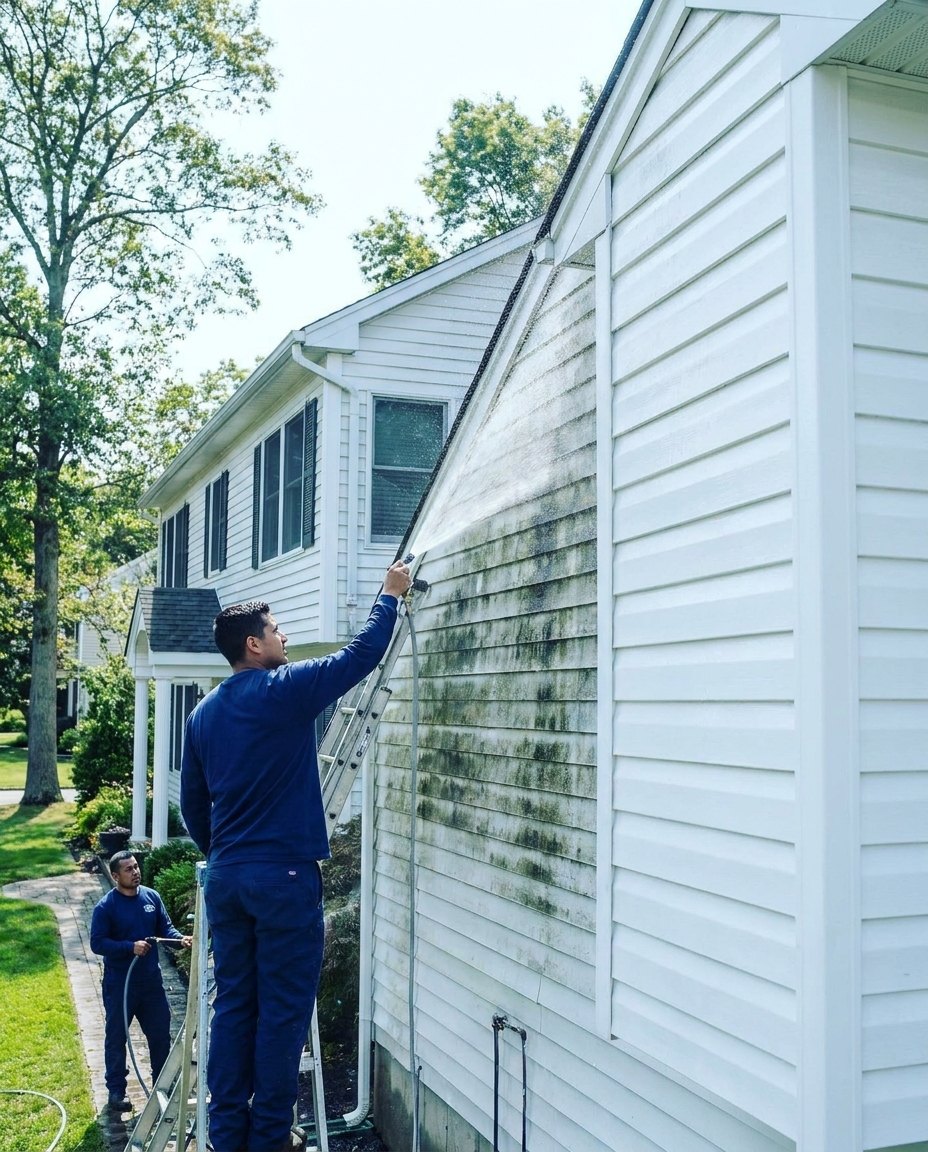
Vinyl siding holds up well to pressure washing when it is done correctly, but the wrong pressure or angle can force water behind the panels or crack them. Here is how to do it safely on a Long Island home.
- Yes, vinyl siding can be pressure washed safely, but technique matters more than raw power.
- Keep pressure in a moderate range (roughly 1,300 to 1,600 PSI), use a wide 40-degree tip, and spray slightly downward.
- For old, brittle, or moss-covered siding, soft washing (low pressure plus a cleaning solution) is safer and lasts longer.
- Never aim upward into seams, and keep the nozzle a foot or two from the surface to avoid forcing water behind the panels.
- On Long Island, North Shore homes fight moss and shade while South Shore homes battle salt air, so cleaning frequency and method differ.
The short answer: yes, with the right approach
Vinyl siding is one of the most forgiving exterior surfaces to clean, and yes, it can be pressure washed safely. The material is durable and designed to shed water, so a controlled stream of water lifts away dirt, pollen, and grime without damage. The problem is almost never the vinyl itself. The problem is technique.
Most of the horror stories homeowners hear about (gouged panels, cracked corners, water dripping from inside window frames a week later) come from too much pressure, the wrong nozzle, or spraying at the wrong angle. Vinyl panels overlap like shingles and are open at the bottom, which means an aggressive upward blast can drive water straight behind them and into the wall cavity. Done correctly, none of that happens.
So the honest answer is that pressure washing vinyl siding is safe when you respect three things: moderate pressure, a wide spray tip, and a downward angle that works with the panels instead of against them.
How much pressure is safe for vinyl?
For vinyl siding, most professionals stay in a moderate range, typically around 1,300 to 1,600 PSI. That is more than enough to remove dirt, cobwebs, and light mildew while staying well under the point where the stream can dent or crack a panel. Many rental machines run 2,500 to 3,000 PSI, and at close range that is genuinely risky on vinyl, especially on older or sun-brittle siding.
Just as important as the PSI is the nozzle. Use a wide-angle tip, either a 40-degree (white) tip or an even gentler 65-degree soft-wash tip. Never use a 0-degree or 15-degree nozzle on siding. Those narrow, high-intensity streams are made for concrete and can slice into vinyl or peel paint off trim in a fraction of a second.
Distance is the third dial. Keep the nozzle about one to two feet from the surface and test on a small, low-visibility area first. If the water is cleaning without leaving marks, you are in the safe zone. If you see the panel flexing or hear a hard slapping sound, back off and widen your distance.
Pressure washing vs. soft washing: which does your siding need?
Here is the distinction that matters most. Pressure washing relies mainly on water force. Soft washing uses very low pressure combined with a cleaning solution that kills mold, mildew, and algae at the root, then rinses it away. For a lot of Long Island homes, soft washing is actually the better and safer choice, especially where organic growth is the real problem.
Plain high-pressure water can knock the green off a wall, but if the siding is stained by algae or mildew, the growth comes back fast because the spores are still alive in the surface. A soft-wash solution treats the cause, so the siding stays clean for much longer, often a year or more. That is why shaded North Shore homes under heavy tree cover, which tend to grow moss and green algae on the north and east walls, usually benefit more from soft washing than from a hard blast.
A good pro reads the surface and picks the method. Newer vinyl with just dust and pollen cleans up beautifully with moderate pressure. Older siding, chalky sun-faded panels, or walls with established algae and mildew are candidates for soft washing. At Premium Services, we default to the gentlest method that fully does the job, which protects both the siding and the seal around your windows and doors.
Step by step: how to pressure wash vinyl siding safely
Start by protecting the area. Close all windows and doors tightly, cover nearby electrical outlets and light fixtures, and move or cover patio furniture and grills. Trim back any shrubs touching the wall so you can reach the full surface. Pre-rinse plants at the base of the house with plain water so any cleaning solution that drips is diluted.
Work from the top down in sections, but aim the stream slightly downward or straight on, never upward into the seams where panels overlap. Vinyl sheds water like a roof, so cleaning downward keeps water on the outside where it belongs. Keep the wand moving in smooth, overlapping horizontal passes rather than holding it on one spot, which prevents streaking and prevents driving water behind the panels.
Save the tricky spots for last: under the eaves, around dryer and bathroom vents, and behind downspouts where spiders and mud daubers love to nest. For stubborn mildew, apply a siding-safe cleaner, let it dwell for the time on the label (usually several minutes, and do not let it dry on the surface), then rinse. Finish with a gentle top-to-bottom rinse so nothing dries with soap residue and leaves streaks.
Long Island specifics: North Shore, South Shore, and the seasons
Where your home sits on the Island changes how its siding gets dirty. North Shore homes in Nassau and northern Suffolk often sit under mature oaks and maples, and that shade plus humidity breeds moss, green algae, and dark mildew streaks, especially on north and east-facing walls. Those homes usually need a soft-wash approach and may want a cleaning once a year to stay ahead of the growth.
South Shore homes closer to the Great South Bay and the ocean deal with a different enemy: salt air and constant humidity. Salt film builds up on siding, dulls the color, and holds moisture that feeds mildew. A regular rinse helps a lot here, and homes near the water often benefit from cleaning once or even twice a year. After a nor'easter or a stretch of coastal storms, a wash also clears the wind-driven grit and organic debris that get plastered onto the walls.
Timing matters too. Late spring is the most popular window on Long Island, once pollen season winds down and before summer humidity peaks. Fall is the other smart slot, clearing off a summer of growth and grime before winter sets in. Avoid washing in freezing temperatures, since water can freeze in the seams and around trim. Colonials, capes, ranches, and hi-ranches all clean up the same way as long as the technique respects the panels.
Signs of damage to watch for (and when to call a pro)
A few warning signs tell you the job is going wrong or that your siding needs a gentler touch. Watch for panels that flex or bow under the stream, water that starts dripping from inside window frames or soffits, a chalky white residue coming off on your hand (a sign of oxidized, sun-aged vinyl), and any cracking or a small hole that suddenly appears. Any of these means you should stop, widen your distance, drop the pressure, or switch to soft washing.
Older siding, homes with existing cracks, loose panels, or damaged caulking, and second-story walls are all situations where a DIY job carries real risk, both to the house and to you on a ladder. Water forced behind vinyl can reach insulation and sheathing, and that kind of hidden moisture damage is far more expensive than the cleaning ever was.
This is where hiring a local pro pays off. A licensed and insured company like Premium Services carries the right equipment, adjusts pressure and cleaning solution to your specific siding, and works safely at height, all while protecting your landscaping and windows. If you are unsure whether your siding should be pressure washed or soft washed, a quick assessment is worth it before anyone points a wand at the wall.
What does it cost on Long Island?
Pricing depends on the size of the home, the number of stories, how dirty the siding is, and how much of the surface has heavy algae or mildew that needs soft-wash treatment. As a rough guide, a full house wash on Long Island typically falls somewhere in the low-to-mid hundreds of dollars for an average single-family home, with larger or two-story homes costing more. These are general ranges, and the only accurate number comes from a quote on your specific house.
What drives the price up is square footage, height (second and third stories take more time and safety setup), the level of organic growth, and add-ons like gutters, walkways, or a deck done at the same time. Bundling services often lowers the per-item cost, which is why many homeowners have the siding, gutters, and driveway done in one visit.
The value is not only cosmetic. Regular cleaning removes the algae and mildew that actually degrade siding over time and keeps salt and grime from dulling the finish, which protects your home's curb appeal and helps the siding last. For an accurate, no-guesswork price, the best move is to get a free quote from a local company that can see the home. Premium Services covers Nassau and Suffolk and can book an assessment by phone at (934) 500-2940.
Frequently asked questions
It can if you use too much pressure, a narrow nozzle, or spray upward into the seams at close range. Staying in a moderate PSI range, using a wide 40-degree tip, and keeping your distance makes it safe for vinyl.
Most professionals stay around 1,300 to 1,600 PSI on vinyl. That cleans effectively while staying well below the pressure that can dent or crack panels, especially on older, sun-aged siding.
Often yes, especially for algae, mildew, or moss, which are common on shaded Long Island homes. Soft washing uses low pressure plus a cleaning solution that kills the growth at the root, so the siding stays clean much longer.
Once a year is a good baseline for most homes. Shaded North Shore homes prone to moss and South Shore homes near salt air may benefit from once or twice a year to stay ahead of growth and salt film.
Single-story newer siding with light dirt is doable as a careful DIY. For second stories, older or brittle vinyl, or heavy algae, a licensed and insured pro is safer and avoids costly water damage behind the panels.
Rather leave it to the pros?
Premium Services covers all of Long Island. Free, no-obligation estimate.
Pressure Washing near you
Get it done by a local, licensed team.