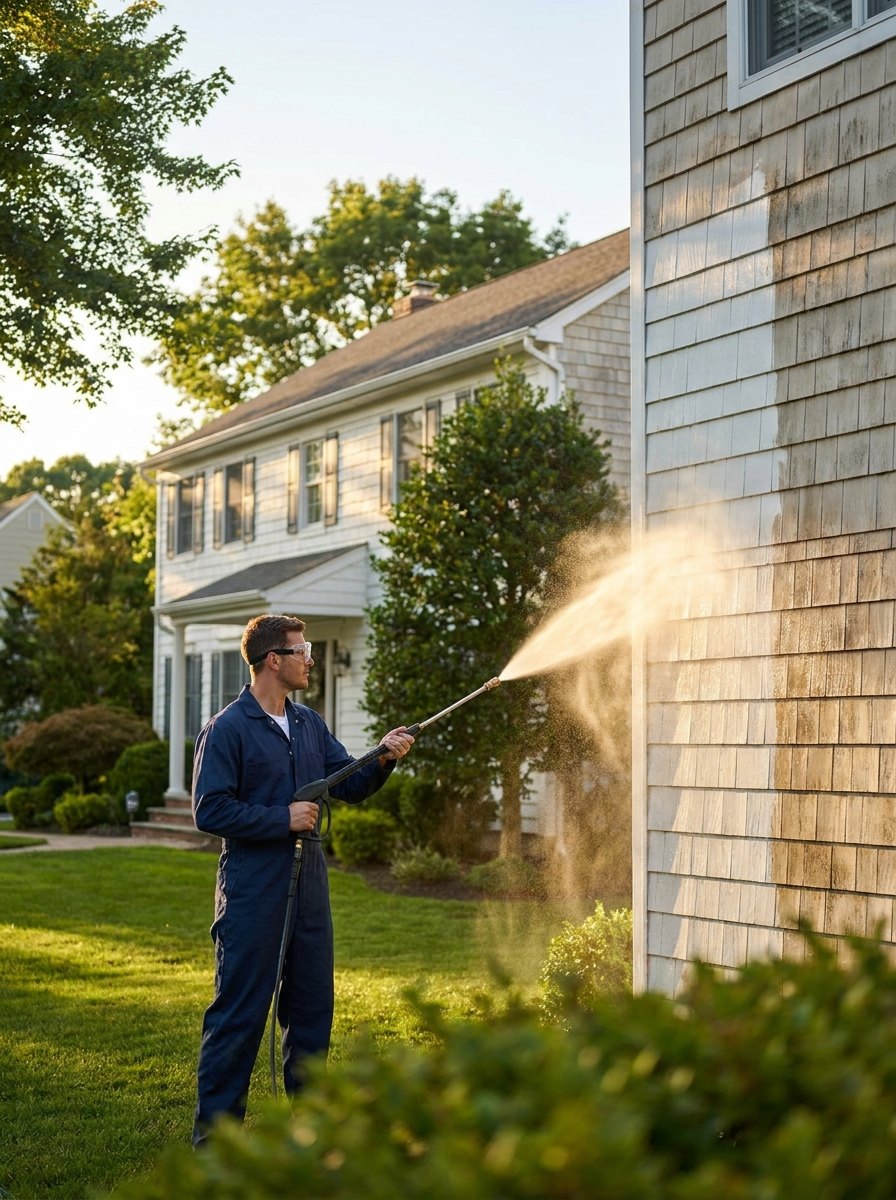
After a long Long Island winter, your home's exterior needs attention before summer. Here is a room-by-room checklist to tackle it in the right order, plus what most homeowners can DIY and what is worth hiring out.
- Work top to bottom: roof and gutters first, then siding, then walkways and decks, so you never re-dirty a clean surface.
- Long Island's winters leave behind moss, algae, salt residue and clogged gutters that get worse if you wait.
- Soft washing, not high pressure, is the safe method for roofs, cedar shakes and older siding.
- Clean gutters and downspouts early to protect against spring rain and the next nor'easter.
- Hire a licensed and insured local pro for roof work, second-story surfaces and anything on a ladder.
Why spring is the right time on Long Island
Long Island winters are hard on a home's exterior. Freeze and thaw cycles, road salt, heavy snow loads and the occasional nor'easter all leave a mark. By the time the weather warms up, most homes are carrying a winter's worth of grime, organic growth and debris that will only get harder to remove as it bakes in the summer sun.
Spring, roughly April into early June, is the sweet spot. Temperatures are mild, the risk of hard frost has passed, and cleaning now sets your home up to look good and stay protected through the humid summer. Tackling it early also means you catch small problems, like a loose gutter or a cracked caulk line, before summer storms turn them into expensive ones.
If you live on the North Shore under heavy tree cover, you are probably dealing with moss and algae on shaded roofs and siding. On the South Shore, salt air and humidity leave a fine, sticky film on everything facing the water. The checklist below works for both, but keep your specific conditions in mind as you go.
Start at the top: roof and gutters
Always work from the top down. The roof and gutters come first because anything you loosen up there will wash down onto the rest of the house. Start by clearing gutters and downspouts of leaves, shingle grit and the seed pods that fall through winter and early spring. Flush them with a hose and confirm water actually runs out the bottom of each downspout. Clogged gutters are the number one cause of water finding its way behind fascia and into the foundation.
Next, look at the roof itself. Those black streaks and green patches on North Shore roofs are algae and moss, not dirt. They hold moisture against the shingles and shorten roof life if left alone. The correct fix is a low-pressure soft wash with a cleaning solution, never a pressure washer, which strips the protective granules off asphalt shingles and voids many warranties.
Roof and gutter work means ladders, steep slopes and slick surfaces, so this is the part of the checklist most homeowners should hand off. A licensed and insured company like Premium Services handles roof and gutter cleaning with the right soft wash equipment and safety gear, and can flag damaged shingles or loose gutter sections while they are up there.
Siding, trim and gutters' exterior face
With the roof handled, move to the siding. Vinyl, aluminum, fiber cement and cedar shake all collect a green or gray film over winter, especially on north-facing and shaded walls. For most siding, a soft wash with a mild detergent removes mildew and grime without forcing water up behind the panels, which is a real risk with high pressure on vinyl.
Cedar shakes and older wood siding, common on many classic Long Island Colonials and Capes, need a gentle touch. Too much pressure splinters the wood and blasts away the finish. If your home has delicate materials, this is another good reason to use a pro who adjusts the method to the surface rather than one setting for everything.
While you are working the walls, wipe down or rinse the outward-facing gutters, fascia and window trim. Don't forget exterior light fixtures, house numbers and the front door surround. These small details are what make a freshly cleaned home actually look freshly cleaned from the curb.
Decks, patios, driveways and walkways
Now work your way down to ground level. Concrete driveways, paver patios and brick walkways collect a slick layer of algae and moss over winter, which is not just ugly but genuinely slippery when wet. Pressure washing concrete and pavers is one of the most satisfying spring jobs and one of the safer DIY tasks, as long as you keep the nozzle moving and use a fan tip rather than a pinpoint stream that can etch the surface.
Wood and composite decks need more care. Pressure-treated lumber can handle moderate pressure, but too much will raise the grain and leave permanent marks. Composite decking should be cleaned with a lower setting and a deck-safe cleaner. Test any method in an inconspicuous corner first and let it dry to see the real result before doing the whole surface.
Pavers deserve a special note. After cleaning, many paver patios and walkways benefit from fresh polymeric sand in the joints to lock everything in place and slow down weed growth for the season. It is a small extra step that makes the cleaning last much longer.
The details: windows, solar panels and outdoor living
Once the big surfaces are clean, the finishing details make a real difference. Wash exterior windows, screens and storm doors. Winter leaves a mineral haze on glass, especially near the South Shore where salt air is constant. Clean screens on a flat surface with soapy water and let them dry fully before reinstalling.
If you have solar panels, spring is the time to check them. A winter of pollen, tree sap and grime can measurably reduce output, and panels tend to underperform right when you want them producing most. Solar panels need careful cleaning with the right water and no abrasives, so many homeowners have this done professionally along with the rest of the exterior.
Finally, get your outdoor living space ready. Rinse and wipe down patio furniture, clean the grill, hose off outdoor cushions and cushions storage, and clear cobwebs from the porch and eaves. This is also a good moment to wash the mailbox, fence and any pergola or railing, so the whole property reads as cared for, not just the house itself.
What to DIY and what to hire out
Be honest about which jobs are worth your Saturday and which carry real risk. Ground-level work like driveways, walkways, patios, fences and lower siding is very doable for most homeowners with a rented or owned pressure washer, some patience and the right nozzle. These are the tasks where a DIY approach saves money without much downside.
Anything involving a ladder, a roof, second-story siding or delicate materials is a different story. Falls from ladders are among the most common serious home-improvement injuries, and roof cleaning done wrong can cause thousands in shingle damage. Soft washing also uses specific solutions and dilution rates that pros dial in by surface. When the job is high, steep or delicate, the cost of hiring a licensed and insured company is usually far less than the cost of a mistake.
As for pricing, exterior cleaning on Long Island typically ranges widely depending on the size of the home, the number of stories, how much buildup there is, and which services you bundle. Roof soft washing, house washing and driveway cleaning are often priced separately, and bundling them usually costs less than booking each on its own. Any reputable company should walk your property and give a clear written estimate before starting, so ask questions and get the scope in writing.
Frequently asked questions
Aim for April through early June, once the risk of hard frost has passed and temperatures are consistently mild. Starting early lets you catch winter damage before summer storms and books you in before the busy season fills up.
Roofs should never be high-pressure washed, as it strips protective granules and can void warranties; they need a low-pressure soft wash instead. Vinyl siding can be cleaned with a soft wash, but high pressure risks forcing water behind the panels, so keep it gentle or hire a pro.
Prices vary widely based on home size, number of stories, how much buildup there is, and which services you bundle. Roof, house and driveway cleaning are usually priced separately and cost less when bundled, so ask any company for a clear written estimate after they see the property.
Those are algae and moss, which thrive in the shade and moisture common under North Shore tree cover, not ordinary dirt. Left alone they hold water against the shingles and shorten roof life, so a professional soft wash is the safe way to remove them.
Yes. Salt air and humidity leave a sticky film on siding, windows and outdoor furniture and can accelerate corrosion on metal fixtures. A yearly spring wash rinses away that buildup before it becomes harder to remove or causes lasting damage.
Rather leave it to the pros?
Premium Services covers all of Long Island. Free, no-obligation estimate.