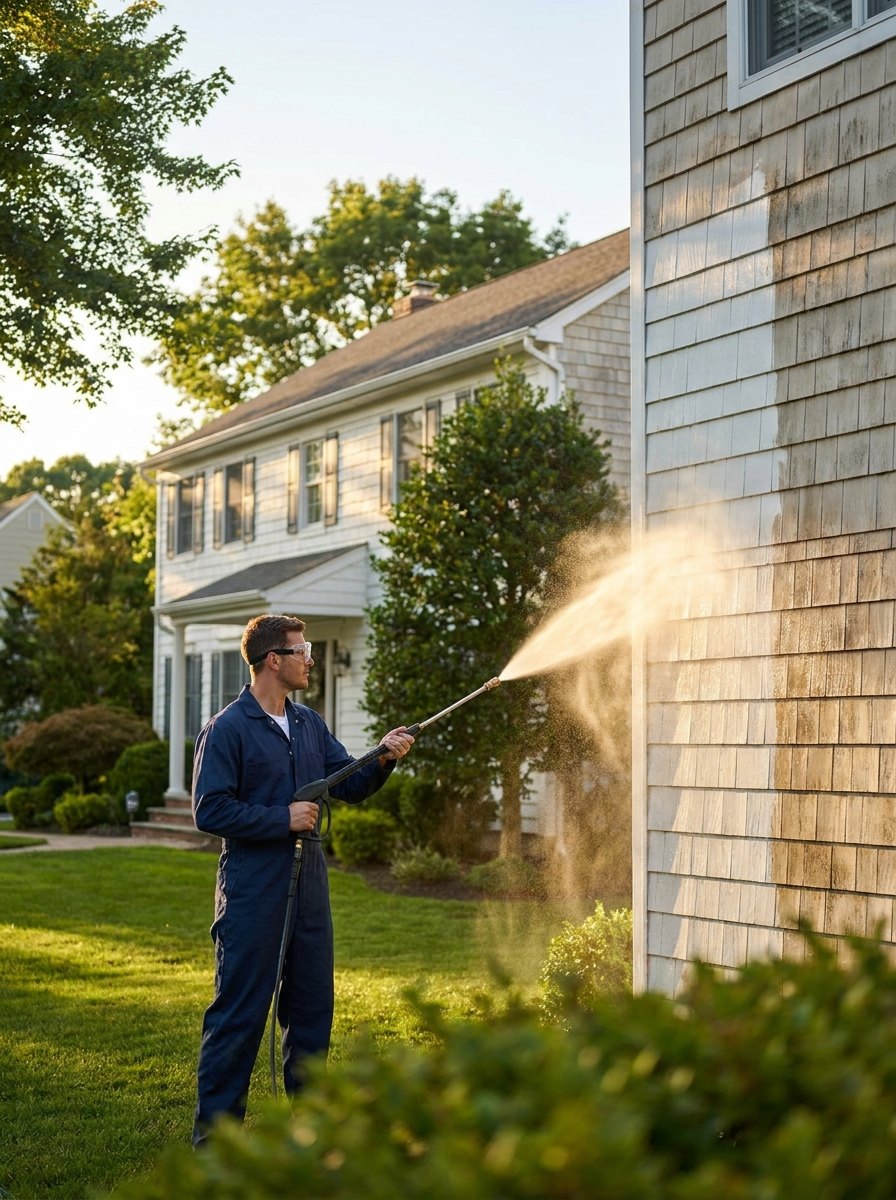
Living near the water on Long Island is a gift, but salt air puts constant, invisible stress on your home's exterior. Here is what it does and how to stay ahead of it.
- Salt air carries fine airborne salt that clings to siding, roofs, glass and metal, speeding up corrosion and grime buildup.
- South Shore homes near the bays and ocean feel it most, but wind pushes salt well inland across both Nassau and Suffolk.
- The clearest warning signs are white salty film on windows, rust streaks, pitted metal fixtures and premature staining on siding.
- Regular gentle washing, rinsing metal hardware and keeping gutters clear are the cheapest ways to slow the damage.
- A yearly professional exterior wash removes salt and grime that a garden hose cannot reach and protects your paint and finishes.
What salt air actually is
Salt air is not just a smell or a feeling. When waves break along the South Shore and across the bays, they throw tiny droplets of seawater into the air. The water evaporates and leaves microscopic salt crystals floating on the breeze. That salty mist, sometimes called salt spray or salt aerosol, drifts over your yard and settles on every surface it touches.
Salt is hygroscopic, which is a fancy way of saying it pulls moisture out of the air. So a light coating of salt on your siding or railings does not just sit there. It stays damp longer than a clean surface would, and that constant low level of moisture is what does the real damage over the years. On Long Island, where humidity runs high in summer and the ocean is never far, this is a year-round reality rather than an occasional event.
The closer you are to the water, the heavier the load. Homes on the barrier islands, in the Hamptons, along the Great South Bay and near the North Shore harbors get the most. But do not assume you are safe a few miles inland. A strong onshore wind or a nor'easter can carry salt well past the shoreline into central Nassau and Suffolk.
What salt air does to your siding and paint
Your siding takes the first hit. Salt crystals are gritty and slightly abrasive, and combined with wind they slowly wear at paint and finishes. On the vinyl siding common across Long Island, salt film mixes with pollen, dust and the moisture the salt itself attracts, and the result is a dull, chalky, hard to clean surface that ages faster than it should.
Wood siding and trim, found on many older Colonials, Cape Cods and shingle-style South Shore homes, are especially vulnerable. Salt keeps the wood damp, which encourages paint to blister, peel and lift earlier than the paint can label would suggest. Once the seal is broken, moisture gets underneath and the problem compounds. Fiber cement and painted brick fare better but still collect a salty grime layer that traps dirt.
The practical effect is that a house near the water often needs repainting and refinishing years sooner than the same house inland. Keeping salt from building up will not stop aging entirely, but it meaningfully slows it and protects the money you already spent on paint and materials.
Roofs, gutters and the moss problem
Salt air affects your roof in two ways. First, on any metal roofing, flashing, valleys or fasteners, salt accelerates corrosion, so you may see rust streaks and weakened seams sooner than expected. Second, the constant dampness that salt encourages creates a friendly environment for algae, mold and moss, especially the black streaking you see on north-facing asphalt shingles.
This is where Long Island's geography splits. On the shady, tree-heavy North Shore, moss and algae are often the bigger roof enemy, feeding on moisture held under leaf cover. On the sunnier, breezier South Shore, salt corrosion and grime tend to lead. Many homes deal with both. Either way, algae and moss hold water against the shingles and shorten roof life, so they are worth removing with a proper low-pressure soft wash rather than aggressive scrubbing.
Gutters matter just as much. Salt air, mixed with the leaves and pine needles that fall heavily here, leaves a sticky, staining residue inside and on the face of gutters. Clogged gutters trap moisture right against your fascia and roof edge, which is exactly where salt-driven rot likes to start. Keeping gutters clean and flowing is one of the highest-value, lowest-cost things a waterfront-area homeowner can do.
Metal, glass and everything else outside
Once you start looking, salt damage shows up everywhere metal meets weather. Railings, light fixtures, door hardware, garage door tracks, outdoor furniture, grills, HVAC condenser units and even the screws and brackets holding things together all corrode faster near the coast. You may notice pitting, a chalky white bloom on aluminum, or orange rust bleeding onto surfaces below.
Glass and screens take a beating too. That white haze on your windows that keeps coming back is often salt film, and left alone it can etch the glass over time. Window screens and door screens hold salt and grime in the mesh, which is why they clog and stain so quickly in shore neighborhoods. Solar panels are in the same boat: a salty, dusty film on the glass cuts how much sunlight reaches the cells and quietly lowers your energy production until they are cleaned.
None of this is a reason to panic, but it is a reason to build a rhythm. Rinsing exposed metal with fresh water, wiping down hardware, and cleaning glass and panels on a schedule keeps small surface salt from turning into permanent pitting and staining.
The warning signs to watch for
You do not need to be an expert to catch salt damage early. Walk your property a couple of times a year and look for a few specific things. A persistent white, powdery or crusty film on windows, railings and siding is salt. Rust streaks running down from screws, nails, fixtures or flashing mean corrosion is underway. Paint that is blistering, peeling or chalking sooner than you would expect is a classic coastal sign.
Also watch for green or black streaking on the roof and north-facing walls, soft or spongy wood around window frames and trim, and sticky dark staining on gutter faces. On aluminum, look for a dull white chalky powder that rubs off on your hand. On solar panels, a noticeable drop in production during sunny stretches can point to a dirty, salt-filmed surface.
The pattern that matters is speed. Things wearing, staining or corroding faster than they should is the tell that salt air is at work. Catching it early, while it is still surface salt and light grime, is the difference between a simple wash and a costly repair or repaint.
What you can do to protect your home
The single most effective habit is rinsing. Fresh water dissolves and carries away salt before it can settle in and hold moisture. Give exposed metal, railings, outdoor furniture and hardware a hose-down every few weeks in the warm months, and do it right after a big storm or nor'easter that drives extra salt inland. It costs almost nothing and pays off for years.
Beyond that, keep gutters clean and flowing so water and salty debris drain away from your roof edge and fascia rather than pooling. Rinse window screens and glass to stop salt film from building. If you have solar panels, keep them clean so salt and dust are not quietly stealing production. Choose salt-tolerant and corrosion-resistant materials when you replace fixtures, and stay current on exterior paint and sealants, since intact paint is your main barrier against salt-driven moisture.
For the surfaces you cannot reach safely or clean thoroughly with a garden hose, a professional exterior wash makes a real difference. A yearly gentle wash of siding, roof, gutters, glass and panels lifts off the salt film and grime that ordinary rinsing leaves behind. Premium Services US is a licensed and insured local company that does exactly this kind of work across Nassau and Suffolk, using low-pressure soft washing that cleans without driving water where it should not go. Whether you hire a pro or do it yourself, the goal is the same: keep salt from settling in and staying wet.
Frequently asked questions
It varies with wind and weather, but salt is heaviest within roughly a mile or two of the water. Strong onshore winds and nor'easters can push measurable salt several miles inland across both Nassau and Suffolk, so even mid-island homes see some effect.
For most Long Island shore homes, a professional exterior wash once a year keeps salt film and grime under control. Between washes, rinsing exposed metal and glass with a garden hose every few weeks, especially after big storms, goes a long way.
High pressure aimed at delicate surfaces can, which is why quality companies use low-pressure soft washing for siding, roofs and painted wood. It cleans with gentle pressure and the right solutions instead of blasting water where it does not belong.
Yes. A salty, dusty film on the glass blocks some of the sunlight from reaching the cells, so production drifts down until the panels are cleaned. Near the water this film builds faster, which is why coastal panels benefit from more regular cleaning.
Rather leave it to the pros?
Premium Services covers all of Long Island. Free, no-obligation estimate.