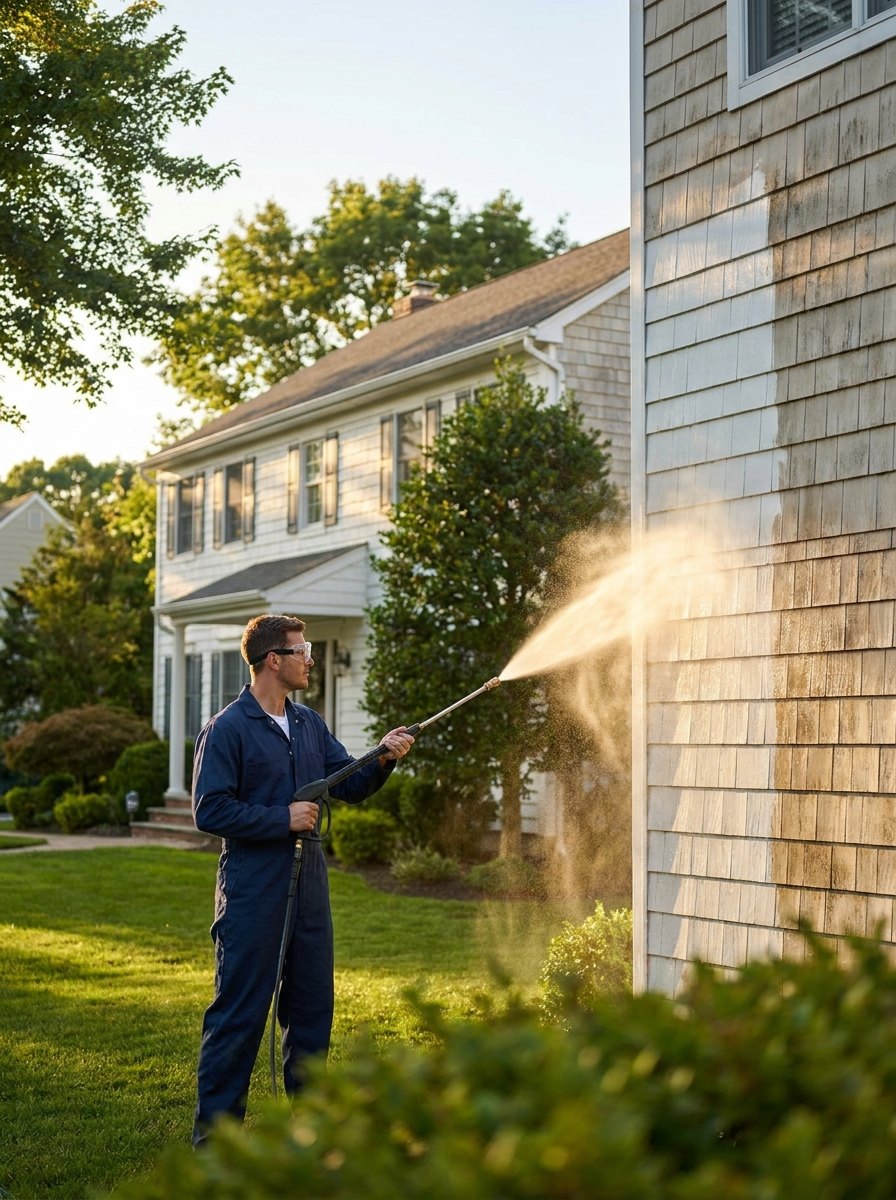
Long Island is small, but the North Shore and South Shore create very different conditions for your home. Knowing which side you are on tells you what to watch for, how often to clean, and where problems start.
- North Shore homes deal with heavy tree cover, shade, and moisture, which means moss, algae, and clogged gutters are the main enemies.
- South Shore homes face salt air, wind, and humidity, which accelerates corrosion, siding grime, and roof wear.
- Both sides get all four seasons and the occasional nor'easter, so seasonal timing matters more than the calendar date.
- Most exterior cleaning is preventive: catching moss, salt, or debris early is far cheaper than repairs.
- Matching your maintenance to your side of the Island saves money and extends the life of your roof, siding, and gutters.
Same island, two very different climates
It is easy to think of Long Island as one place with one climate, but any local contractor will tell you the North Shore and South Shore behave like two different worlds. The North Shore, with its hills, mature trees, and rocky coastline along the Long Island Sound, tends to be shadier, cooler, and more humid at ground level. The South Shore, flatter and open to the Atlantic, gets constant salt-laden wind, stronger sun exposure, and moisture that lingers in the air.
These differences are not just about comfort. They decide what grows on your roof, how fast your gutters fill, how quickly metal parts corrode, and how often your siding needs attention. A maintenance routine that keeps a Port Washington home spotless can leave a Freeport home neglected in the ways that matter most, and the reverse is just as true.
The goal of this guide is simple. Once you know which side of the Island your home sits on, you can stop guessing and start maintaining the things that actually wear out where you live.
North Shore: trees, shade, moss, and moisture
The North Shore is known for its beautiful tree cover, from the estates of the Gold Coast to leafy neighborhoods in Huntington, Oyster Bay, and Great Neck. Those trees are a gift for shade and privacy, but they create a specific set of maintenance challenges. Constant shade keeps roofs and north-facing siding damp, and damp surfaces grow moss, algae, and lichen. That black streaking and green fuzz you see on many North Shore roofs is not just cosmetic. Moss holds moisture against shingles and can shorten a roof's life.
Trees also mean debris. Leaves, twigs, seed pods, and pine needles fill gutters faster here than almost anywhere else on the Island, especially in fall. Clogged gutters send water where it should not go, which leads to fascia rot, foundation moisture, and ice dams in winter. If your home sits under mature oaks or maples, twice-a-year gutter cleaning is closer to a minimum than a luxury.
The practical routine for most North Shore homes looks like this: clear gutters in late spring and again in late fall, inspect the roof for moss and algae at least once a year, and treat or soft-wash shaded surfaces before growth takes hold. Because so many of these surfaces stay wet, gentle low-pressure cleaning usually beats aggressive blasting, which can drive water under shingles or damage older cedar shakes common in the area.
South Shore: salt air, wind, and humidity
The South Shore, from Long Beach and the Rockaways out through Massapequa, Babylon, and the barrier beaches, lives with the ocean at its door. That comes with salt. Salt air is fine and invisible, but it settles on everything: siding, windows, railings, light fixtures, screens, and outdoor furniture. Over time it builds a hazy film and, more importantly, it accelerates corrosion on any exposed metal, including gutter fasteners, hardware, HVAC condenser units, and nails.
Humidity and wind compound the problem. Warm, moist ocean air keeps siding grimy and encourages mildew on shaded walls, while wind drives salt and sand into every seam. Homes closest to the water often notice that fixtures pit and stain faster than they expect, and that windows need washing more often just to stay clear. None of this is a sign you did anything wrong. It is simply the cost of a waterfront address.
The right response is rinsing and regular cleaning rather than harsh treatment. Periodically washing salt off siding, windows, and railings, especially after storms, keeps corrosion and staining in check. Many South Shore owners do a thorough exterior cleaning in spring to undo winter salt buildup and again in late summer. Rinsing exposed metal with fresh water now and then is a small habit that meaningfully extends the life of hardware and fixtures near the coast.
What both sides share: four seasons and nor'easters
No matter which shore you call home, all of Long Island gets a real four-season climate and the occasional nor'easter. Freeze-thaw cycles in winter are hard on roofs, gutters, and walkways everywhere. Water that sits in a clogged gutter freezes, expands, and pulls the gutter loose or backs up under the shingles as an ice dam. This is why fall gutter cleaning matters for every home, whether your clog comes from oak leaves up north or wind-blown debris down south.
Nor'easters and summer storms add another shared risk: sudden loads of debris, wind-driven rain, and standing water. After a big storm it is worth a quick walk around the house to check gutters and downspouts, look for lifted shingles, and clear anything blocking drainage. Small problems found the week after a storm are cheap to fix. The same problems found months later, after water has been getting in, rarely are.
The four seasons also set the calendar for the rest of your exterior care. Spring is the natural time to wash away winter grime and salt and to prep for the year. Fall is the time to clean gutters and get ahead of leaf drop. Booking these around the season rather than a fixed date lets you work with Long Island weather instead of against it.
A simple maintenance checklist for your side
If you are on the North Shore, prioritize anything moisture and debris related. Clean gutters at least twice a year, more if you are under heavy tree cover. Inspect the roof yearly for moss, algae, and dark streaking, and have shaded areas soft-washed before growth spreads. Keep tree branches trimmed back from the roof so surfaces can dry, and watch north-facing walls and decks, which stay damp longest and mildew first.
If you are on the South Shore, prioritize salt and corrosion. Rinse or wash siding, windows, and railings on a regular schedule and after storms. Give special attention to exposed metal, HVAC units, and hardware, rinsing them with fresh water when you can. Plan a fuller exterior wash in spring to strip winter salt, and keep an eye on solar panels if you have them, since salt film and grime can quietly cut their output over a season.
Both sides benefit from a post-storm walkaround and a seasonal rhythm rather than a random one. If any of this feels like more than you want to handle from a ladder, a licensed and insured local company like Premium Services can inspect, soft-wash, and clean roofs, gutters, siding, and solar panels safely, and can tell you honestly whether something needs attention now or can wait.
What this costs, and what drives the price
Exterior cleaning prices vary a lot, so treat any number as a starting point rather than a quote. On average, a gutter cleaning for a typical single-family home on Long Island tends to run in the low-to-mid hundreds of dollars, while a full house soft-wash or pressure washing job usually lands somewhere in the mid hundreds and up. Roof cleaning and larger or multi-story homes cost more. The honest answer is that price depends on your specific home, which is why reputable companies quote after seeing it.
The main drivers are size and height (more square footage and more stories mean more time and safety equipment), the amount of buildup (a lightly soiled surface cleans faster than years of moss or salt), and access (steep roofs, tight lots, and second-story gutters take longer). Your side of the Island plays in too. Heavy North Shore moss can require gentle, repeated treatment, while thick South Shore salt film may need more thorough rinsing.
One thing stays true on both shores: preventive cleaning is almost always cheaper than the repair it avoids. Clearing a clogged gutter costs a fraction of replacing rotted fascia or fixing water damage inside a wall. Cleaning moss off a roof early costs far less than replacing shingles it wore out. Spending a little on a regular schedule is how most homeowners here keep the big bills away.
Frequently asked questions
Roughly, if your side of Long Island faces the Long Island Sound to the north (towns like Huntington, Oyster Bay, Port Washington, Great Neck), you are North Shore. If you face the Atlantic to the south (Long Beach, Freeport, Massapequa, Babylon), you are South Shore. If you are in the middle, you likely see a mix of both sets of conditions.
Twice a year is a good baseline for most homes, typically late spring and late fall. If you are on the North Shore under heavy tree cover, you may need more frequent cleanings, and it is always smart to check after a nor'easter or big storm.
Yes, over time. Salt does not destroy things overnight, but it settles on surfaces and speeds up corrosion on exposed metal and staining on siding, windows, and fixtures. Regular rinsing and washing, especially after storms, keeps it from building up and doing lasting harm.
It is a real problem, not just cosmetic. Moss and algae hold moisture against your shingles, which can degrade them faster and shorten your roof's life. It is best treated gently and early, before growth spreads, using low-pressure soft washing rather than aggressive blasting.
You can wash some low, easy-to-reach siding yourself, but roofs and second-story work are risky, and high pressure can damage shingles, cedar shakes, and older siding. For roofs, solar panels, and anything requiring a ladder, a licensed and insured company like Premium Services (934) 500-2940 can do it safely with the right low-pressure methods.
Rather leave it to the pros?
Premium Services covers all of Long Island. Free, no-obligation estimate.