Moss on a Long Island roof is more than a cosmetic problem. Here is why it grows, how to remove it without wrecking your shingles, and how to keep it away.
- Moss grows where a roof stays shaded and damp, which is common under North Shore tree cover and in humid South Shore air.
- Never pressure wash asphalt shingles. It strips the protective granules and shortens the roof's life.
- The safe method is a gentle spray, a soft brush stroke downward, and a patient rinse, usually with a 50/50 water and cleaner mix.
- Left alone, moss lifts shingles, traps water, and pushes debris into gutters, which invites leaks and rot.
- Zinc or copper strips near the ridge and clean, free flowing gutters are the best long term prevention.
Why moss grows on Long Island roofs
Moss is a simple plant that needs three things to thrive: shade, moisture, and a surface it can cling to. A Long Island roof often gives it all three. On the North Shore, mature oaks and maples throw long shadows and drop leaves that hold dampness against the shingles. On the South Shore, salt air and steady humidity keep the roof surface from drying out fully, especially on north facing slopes that rarely see direct sun.
Our four seasons make the problem worse over time. Spring rain and summer humidity feed new growth, fall leaves pile into the low spots and valleys, and winter snow melts slowly on shaded sections. Each nor'easter that blows through leaves the roof wet for days. That cycle of wet, shade, and organic debris is exactly what moss loves, which is why so many homes here see it creep in within a few years of a roof cleaning.
It usually starts as a thin green fuzz between shingles, then thickens into spongy clumps. The north and west facing slopes, the areas under tree branches, and the sections just above the gutters are almost always the first to go.
Why you should not ignore it
Moss is not just an eyesore. As it grows, it works its way under the edges of your shingles and lifts them. Once a shingle is lifted, wind driven rain and melting snow can slip underneath, and that is how leaks and wood rot start in the roof deck below. On an older roof, a heavy moss layer can shave years off the remaining life.
Moss also acts like a sponge. It holds water against the roof long after the rain stops, which keeps the surface damp and speeds up wear on the shingle granules. In freezing weather that trapped water expands, and repeated freeze and thaw cycles crack and loosen shingles over a winter.
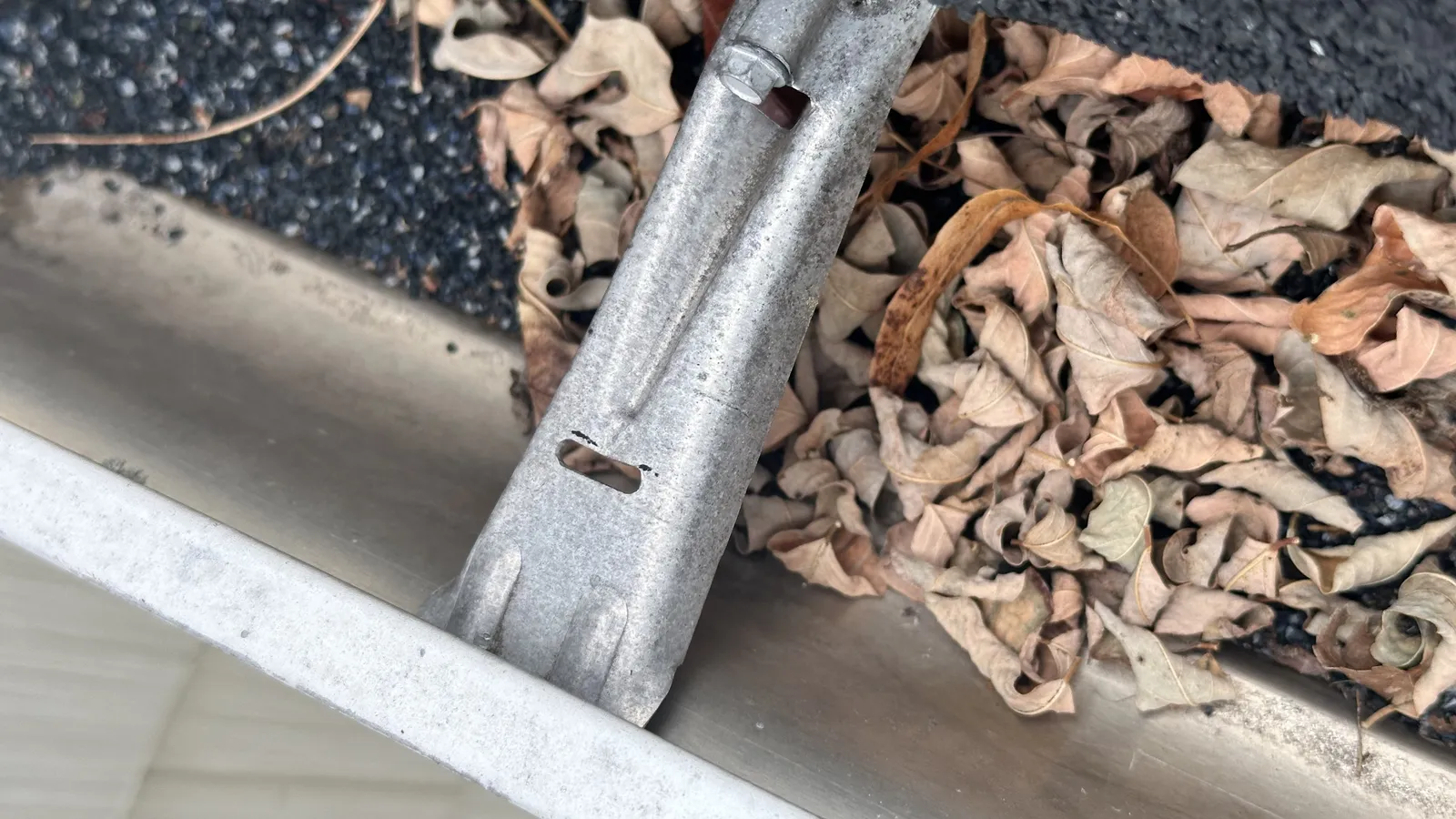
There is a gutter connection too, which matters for the drainage of your whole home. Moss and the debris it traps get washed toward the eaves and end up clogging your gutters. Clogged gutters overflow, send water down your siding and foundation, and can back up under the roof edge. Clearing moss and keeping gutters flowing are really the same job, and both protect the same part of your house.
The safe way to remove roof moss step by step
The golden rule is patience over power. Moss dies and releases easily with a gentle cleaner and time, so there is no reason to attack it. Start on a cool, overcast day with no rain in the forecast for at least a few hours, so your cleaning solution has time to sit and work.
Here is the basic process most professionals follow. First, gently clear loose debris and any thick clumps from the surface with a leaf blower or by hand. Second, mix your cleaner. A common, roof safe mix is roughly equal parts water and either a dedicated roof moss cleaner or plain white vinegar for lighter growth. Third, spray the moss from the bottom of the slope working up, so the solution clings instead of running straight off. Let it sit for the time the product directs, often fifteen to twenty minutes. Fourth, work top down with a soft bristle brush, using short, downward strokes that follow the shingles so you never lift their edges. Fifth, rinse gently with a garden hose set to a low flow, again from the top down.
A few firm safety rules. Never walk a wet or steep roof without proper footing, a harness, and a spotter. Never scrape dry moss with a metal tool, since that tears the granule layer. And never, ever reach for a pressure washer on asphalt shingles. If the roof is steep, tall, or two stories, this is genuinely a job to hand off. Falls from roofs are among the most common serious home injuries, and no green patch is worth it.
What roof moss removal typically costs
If you do it yourself, the out of pocket cost is small, usually just a bottle of roof cleaner, a soft brush, and time. The real cost is risk and effort, since safe roof work needs the right ladder, footing, and often a harness.
For professional moss removal on Long Island, most homeowners can expect a range that typically runs from a few hundred dollars for a small single story ranch up to well over a thousand for a large, steep, or heavily covered roof. The price is driven by a handful of factors: the size and pitch of the roof, how many stories it has, how thick and widespread the moss is, how easy it is to access, and whether the job includes a preventive treatment or gutter cleaning at the same time.
Because moss and gutters are so closely linked here, many homeowners bundle the two. Having a crew clear the roof, flush the gutters, and apply a preventive treatment in one visit usually costs less than booking each separately. Premium Services, a licensed and insured local company, handles this kind of combined exterior work across Nassau and Suffolk, which is often the simplest path when a roof is too tall or steep to safely tackle alone.
How to keep moss from coming back
Removing moss is only half the battle. On a shaded, humid Long Island roof it will return unless you change the conditions that let it grow. The single most effective long term fix is to install zinc or copper strips just below the ridge line. When it rains, tiny amounts of metal wash down the slope and create a surface that moss and algae struggle to colonize. It is a quiet, passive defense that works every time it rains.
Sunlight and airflow help too. Trimming back overhanging branches lets more sun reach the roof and speeds up drying after every storm, which alone can dramatically slow regrowth on North Shore homes buried under tree cover. Keeping the roof clear of leaves and pine needles removes the organic bed that moss and its debris feed on.
Do not overlook the gutters. Clean, free flowing gutters keep water moving off the roof instead of pooling at the eaves where moss thrives. Clearing them at least twice a year, in late spring and again after the fall leaves drop, protects both the roof edge and the foundation. A yearly look at the roof, ideally each spring, lets you catch new growth while it is still a light fuzz and easy to handle.
When to call a professional
Plenty of light moss on a low, one story roof is a reasonable weekend project if you have safe footing and the right gear. But there are clear signals that it is time to bring in a pro. If your roof is two stories, steep, slick, or you would be working from a tall ladder, the fall risk simply outweighs the savings.
Call a professional too if the moss is thick and widespread, if you already see lifted or curling shingles, or if you notice granules collecting in your gutters, since those are signs the roof surface is already stressed and needs a careful hand. A trained crew brings roof safe cleaners, the right soft wash approach, fall protection, and insurance if something goes wrong.
For Long Island homeowners who would rather not climb, Premium Services is a licensed and insured local option that covers roof and moss cleaning, gutter clearing, and preventive treatment across Nassau and Suffolk. You can reach the team at (934) 500-2940 or book a visit online, and it is worth asking about combining roof and gutter work in one appointment to keep the whole drainage system healthy.
Frequently asked questions
You can, but use it carefully and diluted, since strong bleach can damage plants below and lighten shingles. A gentler mix of water with a dedicated roof cleaner or white vinegar is usually safer and still effective. Always rinse nearby landscaping first and after.
No. Pressure washing strips the protective granules off asphalt shingles and can force water under them, which shortens the roof's life and causes leaks. Use a gentle soft wash and a soft brush instead.
Inspect once a year, ideally in spring after winter dampness. Shaded North Shore roofs under heavy tree cover may need attention every one to two years, while sunnier roofs can go longer between cleanings.
Yes, over time. Moss lifts shingle edges and holds moisture against the roof, which lets water slip underneath and rot the wood deck. Removing it early prevents that damage.
Yes. Moss and the debris it traps wash into the gutters and clog them, so clearing both together protects your roof edge and foundation. Many local companies, including Premium Services, bundle the two into one visit.
Rather leave it to the pros?
Premium Services covers all of Long Island. Free, no-obligation estimate.
Roof & Gutters near you
Get it done by a local, licensed team.