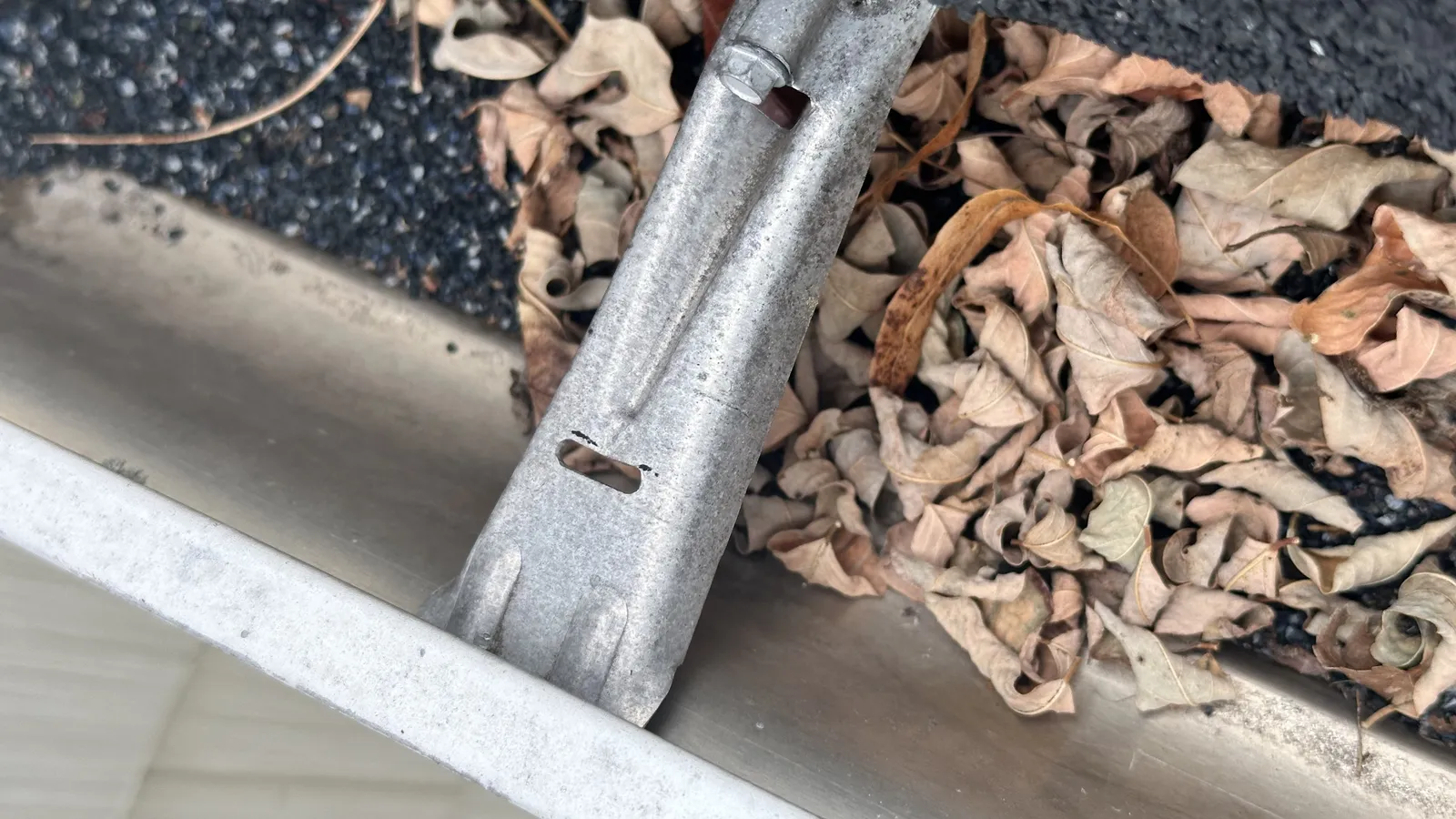
Gutter guards can cut down on cleanings, but they are not the maintenance-free promise many ads make them out to be. Here is an honest, local look at when they pay off on Long Island and when they do not.
- Gutter guards reduce how often you clean, but no guard is truly maintenance-free.
- On Long Island's North Shore, heavy tree cover and fine debris matter more than the brand you pick.
- Quality micro-mesh and reverse-curve guards perform best, but they cost more up front.
- Cheap plastic screens often clog with pine needles and shingle grit and can do more harm than good.
- Professional installation and the right pitch matter as much as the guard itself.
What gutter guards actually do (and don't)
A gutter guard is a cover, screen or mesh that sits over your open gutter to keep leaves and larger debris out while letting water flow in. The honest promise is simple: they reduce how often your gutters clog and overflow, which means fewer cleanings and less risk of water backing up against your fascia and foundation.
The dishonest promise, the one you see in late-night ads, is that guards make gutters completely maintenance-free forever. That is not true. Fine debris like shingle grit, pollen, pine needles, seed pods and the sticky flowers from Long Island's oaks and maples still find their way in or pile up on top. Over time, most guards need a rinse, a brush-off or a periodic check. Think of them as a filter that cuts your workload, not a set-it-and-forget-it fix.
The main types, from cheap to premium
Plastic and vinyl screens are the cheapest option and the ones you can grab at any hardware store. They snap or slide into place, but they warp in summer heat, get brittle in winter, and their wide openings let pine needles and small debris through. On a shaded North Shore lot, they often clog within a season.
Foam and brush inserts sit inside the gutter and block leaves while water passes around them. They are inexpensive and easy to install, but they trap seeds and grit, hold moisture, and can become a garden for weeds and mold. Most homeowners find they need replacing sooner than expected.
Metal screens, micro-mesh and reverse-curve (surface-tension) guards are the premium tier. Micro-mesh uses a fine stainless steel weave that blocks even shingle grit while letting water through, and reverse-curve guards use the water's surface tension to wrap flow into the gutter while debris falls off the edge. These cost more and usually call for professional installation, but on a tree-heavy Long Island property they are the versions actually worth considering.
What gutter guards typically cost
Prices vary a lot, so treat any figure as a range. Do-it-yourself plastic or foam guards typically run a few dollars per linear foot in materials, which can be an inexpensive weekend project if you are comfortable on a ladder. The trade-off is that these budget options tend to underperform and often need replacing within a few years.
Professionally installed metal screens and micro-mesh systems generally cost more per linear foot once you include labor, and premium reverse-curve or branded systems sit at the top of the range. What drives the price is the guard material, the total length of your gutters, the number of stories, roof pitch, how much existing debris has to be cleared first, and whether any gutter repairs are needed before installation.
A realistic way to think about it: on an average single-family Long Island home, a quality professional installation is a meaningful investment, not a small one. The value comes from spreading that cost over many years of reduced cleanings and lower risk of water damage, not from the guard being cheap.
The Long Island factor: trees, salt air and four seasons
Where your home sits on the Island changes the math. North Shore properties in places like Huntington, Oyster Bay and the Gold Coast often sit under mature oaks, maples and evergreens. That heavy tree cover means constant fine debris and, in shaded damp spots, moss and organic buildup. Here a good micro-mesh guard earns its keep, because open gutters can fill within weeks in fall.
South Shore homes closer to the water deal with salt air and high humidity year round. Salt and moisture accelerate corrosion, so if you go with metal guards, stainless steel or quality aluminum holds up far better than cheap coated options. Humidity also encourages mold and mildew on foam or brush inserts, which is one more reason those budget types struggle near the coast.
Then there are the seasons. Spring drops seed pods and pollen, summer brings pop-up storms, fall dumps leaves, and winter brings freeze-thaw cycles and the occasional nor'easter. Ice is the quiet danger: water trapped by debris can freeze, expand and pull gutters loose, or feed ice dams on older Colonials and Capes. Guards that keep gutters flowing before a freeze genuinely reduce that risk, but no guard removes the need to check your system before winter.
When guards are worth it, and when to skip them
Guards make the most sense if you have lots of trees near the roof, if climbing a ladder is unsafe or impractical for you, if your gutters clog several times a year, or if you have had water damage from overflow before. In those cases the reduced cleanings and lower risk usually justify a quality system, especially micro-mesh on a two-story home where cleaning is a real chore.
They make less sense if your lot has few trees and your gutters rarely clog, if your gutters are old and already sagging or pulling away (fix or replace those first), or if your only realistic budget is for cheap plastic screens that will clog anyway. Spending money to install a guard that still traps debris and now hides the problem from view is the worst of both worlds.
One caution: guards do not eliminate maintenance, and a neglected guarded gutter can be harder to service because you have to remove or lift the covers. If you install them, plan on an occasional inspection, ideally in late fall and again in spring. A local pro can check the guards, clear anything sitting on top, and confirm water is actually reaching the downspouts.
Getting it done right on Long Island
The single biggest factor in whether guards perform is how they are installed. Gutters need the right pitch toward the downspouts, guards must sit flush without gaps, and the whole system has to be cleaned and repaired before anything goes on top. A guard installed over a clogged or sagging gutter just locks the problem in. This is why a careful assessment beats picking a product off a shelf.
If you would rather not weigh mesh sizes and pitch angles yourself, a licensed and insured local company can look at your specific roof, tree cover and gutter condition and give you a straight answer, including whether guards even make sense for your home. Premium Services US handles roof and gutter cleaning across Nassau and Suffolk County and can advise on guards as part of that work, so you are not guessing from a catalog.
Whatever you choose, keep the honest framing in mind: gutter guards are a tool to reduce cleanings and protect your home from water, not a magic wand. Matched to the right property and installed correctly, they are often worth it. Bought cheap and forgotten, they usually are not.
Frequently asked questions
No. Good guards greatly reduce how often you clean, but fine debris like pollen, shingle grit and pine needles still collects on or under them. Plan on an occasional inspection, ideally in late fall and spring.
Quality stainless steel micro-mesh generally performs best under heavy tree cover because it blocks even small debris while letting water through. Cheap plastic screens tend to clog quickly with pine needles and seed pods.
Often not. If your gutters rarely clog, the cost of a quality system may not pay off, and a couple of routine cleanings a year could be the more sensible choice for your home.
They can help by keeping gutters clear so water drains before it freezes, which reduces one contributing factor. However, ice dams are mainly driven by attic heat and insulation, so guards alone do not fully prevent them.
Basic screens can be a DIY project if you are safe on a ladder, but premium micro-mesh and reverse-curve systems, and any two-story work, are best left to a licensed and insured installer who will clean, repair and pitch the gutters first.
Rather leave it to the pros?
Premium Services covers all of Long Island. Free, no-obligation estimate.
Roof & Gutters near you
Get it done by a local, licensed team.