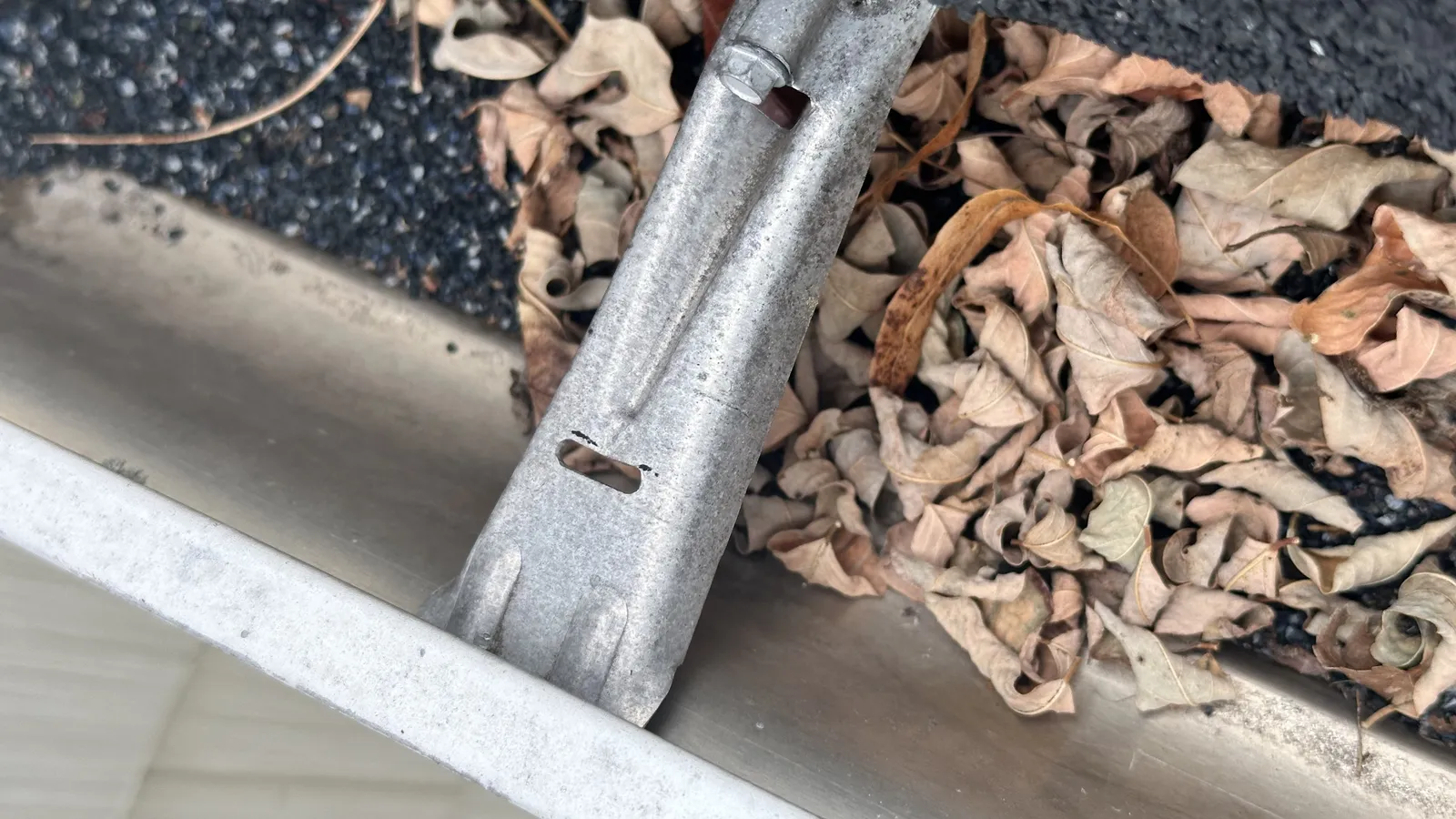
Clogged gutters cause some of the most expensive water damage a Long Island home can suffer, and the warning signs are easy to miss. Here are 7 that mean it is time to clean them now.
- Water overflowing the front edge of the gutter during rain is the clearest sign of a clog.
- Sagging, plant growth, staining on siding, and pest nests all point to gutters that are full and holding weight.
- Long Island's tree cover, salt air, and seasonal storms mean most homes need cleaning at least twice a year.
- Ignoring the signs risks fascia rot, foundation cracks, basement flooding, and ice dams, which cost far more than a cleaning.
Why clean gutters matter more than most homeowners think
Your gutters have one job: to catch rain coming off the roof and carry it away from the house through the downspouts. When they are clear, that water lands several feet from the foundation and everyone forgets they exist. When they are blocked, the water has to go somewhere, and it always finds the most expensive path. It spills down the siding, pools against the foundation, seeps into the basement, or freezes at the roofline in winter.
On Long Island this is not a minor concern. Nassau and Suffolk homes deal with heavy spring rain, humid summers, thick fall leaf drop, and the occasional nor'easter that dumps inches of water in a single day. A gutter system that is even partly clogged simply cannot keep up. The good news is that failing gutters almost always warn you first. Learn to read the signs and you can act before a cheap cleaning turns into a costly repair.
Below are the seven signs we see most often on homes across the Island. If you notice even one of them, it is worth getting up close or calling someone who can.
1. Water spills over the edge when it rains
This is the single most reliable sign, and the easiest to spot. Next time it rains steadily, step outside under an umbrella and look at your gutters. Water should be running along the trough and out the downspouts. If instead you see it sheeting over the front lip like a small waterfall, the gutter is clogged and the water has nowhere else to go.
Overflow is not always constant. A gutter that is half full may handle a light drizzle fine but fail the moment a real downpour hits, which is exactly when you need it working. If you only ever check on dry days, you can miss this entirely. Make a habit of glancing at the roofline during the next heavy rain.
Pay special attention to corners and low points, where debris collects first. Overflow concentrated in one spot usually means a single blockage you can clear, while water pouring over the entire run points to a system that is full end to end.
2. Sagging gutters or gutters pulling away from the house
Gutters are designed to hold water, not the wet leaves, pine needles, shingle grit, and standing sludge that build up when they are not cleaned. A clogged gutter can hold many times its intended weight, and that load pulls on the hangers and the fascia board behind it. Over time the gutter starts to sag in the middle or tilt away from the roofline.
Stand back on your lawn and look down the length of each run. It should sit straight, with a slight, even slope toward the downspouts. Any visible dip, wave, or gap between the gutter and the fascia is a warning. Once the fascia wood gets wet and soft, the fasteners lose their grip and the problem accelerates.
This is common on the North Shore, where mature oaks and maples drop enough debris to load a gutter quickly. Catching a sag early often means a cleaning and a few new hangers. Left alone, it can mean replacing rotted fascia and sections of gutter, which is a much bigger job.
3. Plants, weeds, or seedlings growing in the gutter
If you can see grass, weeds, or even little tree seedlings sprouting from your gutters, they have crossed from clogged into fully soil-like. Decomposed leaves and organic debris turn into a rich, damp bed, and windblown seeds do the rest. Once things are growing up there, the gutter has almost certainly been holding standing water and muck for months.
Green growth is easy to see from the ground, especially in late spring and summer. Maple helicopter seeds are a frequent culprit across Long Island, and they take root fast in a neglected trough. A gutter full enough to grow a garden is a gutter that has stopped draining, which means the water is backing up under the roof edge every time it rains.
This is not a sign to watch and wait on. Growth means the debris layer is deep and heavy, and the underlying fascia and roof edge have likely been damp for a long time. A thorough cleaning, and an honest look at what the water has been doing underneath, is the right next step.
4. Stains, streaks, or peeling paint on the siding and fascia
When a gutter overflows or leaks at the seams, the water runs down the side of the house and leaves a record of where it has been. Look for dark vertical streaks below the gutter line, mud splatter along the lower siding, or a chalky white residue on the fascia. On painted trim you may see bubbling or peeling paint, and on wood, soft spots or discoloration.
These marks are especially useful because they show you damage from rains you did not witness. Even if you never catch the gutter overflowing, the stains prove it has been. South Shore homes deal with a lot of humidity and salt in the air, which speeds up staining and helps mildew and dark streaking take hold on siding that stays wet.
Tannin stains from oak and other leaves can also drip out of a clogged gutter and streak light-colored siding a rusty brown. If your gutters and the trim around them are looking dirty in a way a normal house wash does not fully explain, overflow from clogging is a likely cause.
5. Birds, insects, or rodents nesting in the gutters
A gutter packed with damp leaves and debris is exactly the sheltered, moist environment that pests look for. Birds build nests in the trough, mosquitoes breed in the standing water, and carpenter ants and other insects move into the wet wood at the roof edge. In colder months, mice and squirrels are happy to use a debris-filled gutter as a highway to your attic.
Watch for birds landing on the same spot of the roofline repeatedly, buzzing insect activity around the gutters, or chewing and scratching sounds near the eaves. Mosquitoes are a particular nuisance on Long Island in the warm months, and clogged gutters holding water are one of the most common breeding sites right against the house.
Pests are a two-part warning. They tell you the gutter is holding debris and water, and their nests then make the blockage worse and can chew into the fascia and roof structure. Clearing the gutter removes both the shelter and the standing water that drew them in.
6. Ice dams and giant icicles in winter
Long Island winters bring freeze and thaw cycles that punish clogged gutters. When debris blocks the flow, water sits in the trough and at the roof edge. As temperatures drop it freezes, and the next melt refreezes on top of it. The result is an ice dam, a ridge of ice that traps meltwater behind it and forces it up under the shingles and into the house.
Big, heavy icicles hanging off the gutters may look like a normal part of winter, but a row of them often means water is pooling where it should be draining. Ice dams are a leading cause of interior leaks and stained ceilings in the region, and the heavy ice also strains the gutters and hangers, which is how you end up with sections torn loose after a storm.
The most effective defense is going into winter with clean, free-flowing gutters and downspouts. A fall cleaning after the leaves come down, ideally before the first hard freeze, removes the debris that ice dams are built on and lets snowmelt drain the way it should.
7. Pooling water or a cracked foundation near the house
Look down, not just up. Some of the clearest evidence of gutter trouble shows up on the ground. If you see puddles that linger against the foundation after it rains, channels or eroded trenches in the mulch and soil, or splash marks on the lower foundation wall, water is falling straight off the roof instead of being carried away by the gutters.
Over time this pooling is what leads to the most serious and expensive problems: cracks in the foundation, a wet or flooding basement, and settling that shows up as sticking doors and hairline cracks in interior walls. Water that should have exited the downspout ten feet away is instead soaking the ground right against the house.
Check that each downspout actually carries water well away from the foundation and that the extensions have not come loose. Pairing clean gutters with downspouts that discharge several feet out is one of the cheapest forms of insurance a homeowner has against foundation and basement damage.
How often to clean, and when to call a pro
For most Long Island homes, cleaning the gutters twice a year is the baseline: once in late spring after the seeds and buds drop, and once in fall after the leaves come down. If your house sits under mature trees, which is common on the North Shore, you may need a third visit or a check after big storms. Homes with few trees around them can sometimes stretch to once a year, but it is worth inspecting each season regardless.
As for cost, gutter cleaning is typically priced by the size of the home, the number of stories, the length of gutter, and how much debris has built up. Single-story homes generally fall at the lower end of the range and larger two-story homes with heavy buildup at the higher end. Steep roofs, second and third stories, and clogged downspouts that need to be flushed all add to the price. Beware quotes that seem far below the local average, since they often skip the downspouts or the debris haul-away.
You can handle a light cleaning yourself if you are comfortable and safe on a ladder, but a lot of the signs above involve height, steep pitches, or slippery roofs where a fall is a real risk. If your gutters are on a second story, if the buildup is heavy, or if you are seeing sagging, rot, or foundation pooling, it is smarter to bring in a licensed and insured local company. Premium Services US handles gutter cleaning across Nassau and Suffolk and can inspect the fascia and downspouts while up there. You can reach the team at (934) 500-2940 or book online.
Frequently asked questions
Twice a year is the general rule, once in late spring and once in fall after the leaves drop. Homes surrounded by mature trees, especially on the North Shore, often benefit from a third cleaning or a check after major storms.
Clogged gutters overflow and send water down the siding and against the foundation, which can lead to fascia rot, basement flooding, foundation cracks, pest infestations, and ice dams in winter. These repairs cost far more than routine cleaning.
Price depends on the home's size, number of stories, length of gutter, and how much debris has built up. Single-story homes typically fall at the lower end of the range and larger two-story homes with heavy buildup at the higher end. A local company can give an accurate quote after seeing the property.
A light cleaning on a single-story home is manageable if you are safe on a ladder. For second stories, steep roofs, heavy buildup, or any sign of sagging or rot, a licensed and insured pro is safer and can inspect the fascia and downspouts at the same time.
No. Gutter guards reduce how much debris gets in and how often you need cleaning, but fine grit, pine needles, and seeds still accumulate over time. Guarded gutters should still be inspected and cleared periodically.
Rather leave it to the pros?
Premium Services covers all of Long Island. Free, no-obligation estimate.
Roof & Gutters near you
Get it done by a local, licensed team.