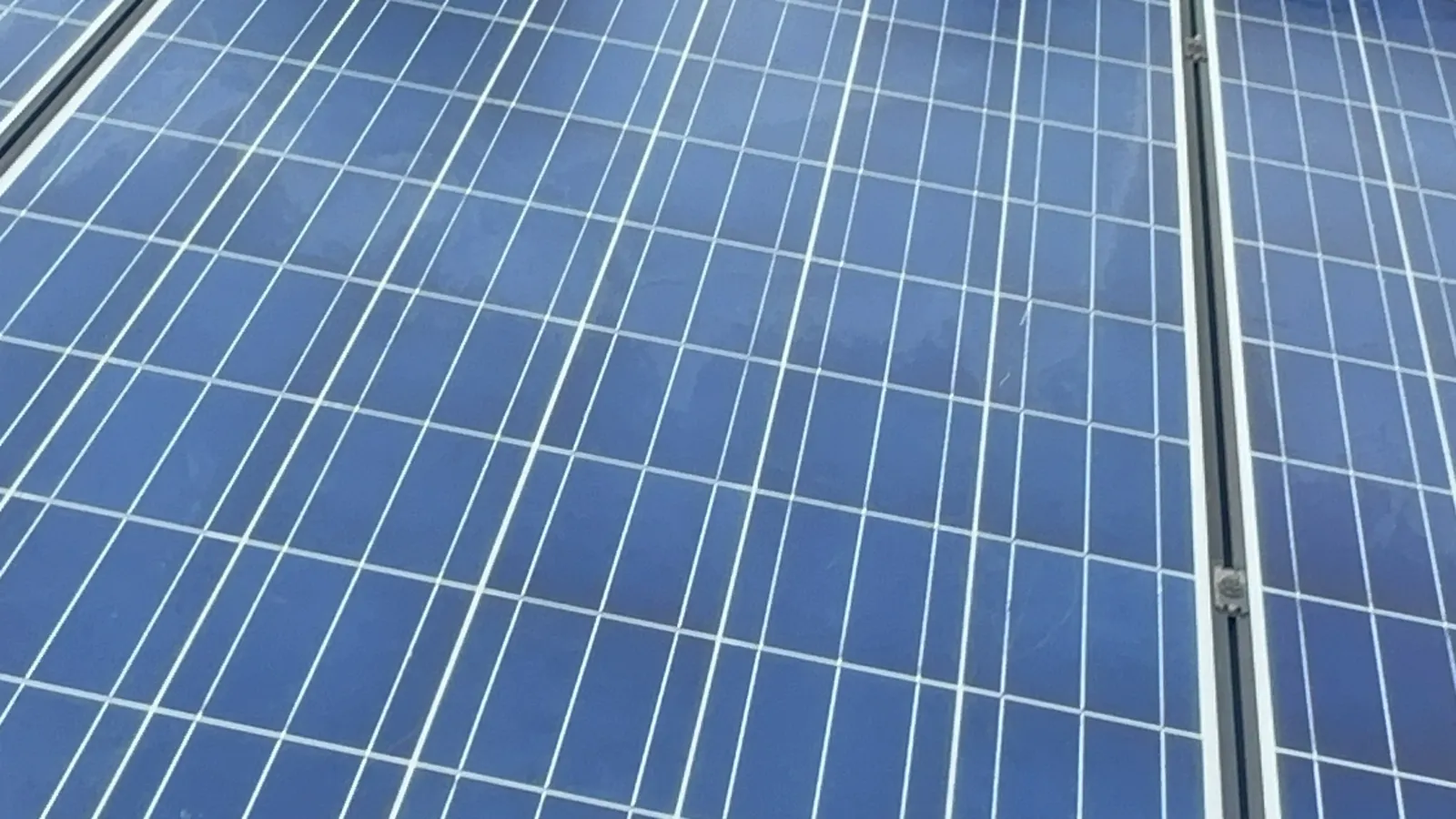
Most Long Island solar panels need a real cleaning once or twice a year, but tree cover, salt air and pollen can change that. Here is how to know your own schedule.
- Most Long Island homes do well with one or two professional cleanings per year.
- Heavy tree cover, pollen, bird droppings and coastal salt air call for more frequent cleaning.
- Rain rinses off light dust but does not remove sticky pollen, sap, droppings or pollen-mud.
- Watch your production numbers: a steady drop with clear skies often means dirty panels.
- Spring (after pollen) and fall (after leaf drop) are the two smartest times to clean on the Island.
The short answer for Long Island homes
For most homes in Nassau and Suffolk County, cleaning your solar panels once or twice a year is enough to keep them working the way they should. That is the baseline that works for the majority of roofs we see across the Island. If your panels are out in the open, get good rain and sit away from heavy tree cover, one thorough cleaning a year may be all you need.
The reason there is no single magic number is that dirt does not build up the same way on every roof. A house tucked into the wooded North Shore collects very different debris than a home a few blocks from the water on the South Shore. Your production, your surroundings and the seasons all move the schedule up or down, so it helps to treat one or two cleanings a year as a starting point, not a hard rule.
Think of it the way you think about gutters or your HVAC filter. A regular rhythm keeps small problems from turning into lost energy and long-term buildup. Skipping cleaning for years rarely breaks anything, but it quietly costs you production season after season.
What makes Long Island panels get dirty faster
The North Shore is heavily wooded, and that matters. Overhanging oaks and maples drop leaves, twigs, seeds and sticky sap, and shaded, damp roofs are exactly where moss and algae like to take hold along the lower edge of a panel. Birds also perch in nearby trees, and droppings are one of the worst offenders because they are acidic, opaque and do not rinse off in a normal rain. Homes with a lot of tree cover often need cleaning two or three times a year rather than once.
The South Shore has a different problem: salt. Communities near the Great South Bay and the ocean live with salt air and high humidity, and that fine salt film settles on glass and holds onto dust. Add the summer humidity that hangs over the Island and you get a haze that dulls panels even when it has not rained dirt. Coastal homes tend to benefit from a check-up more often than inland ones.
Then there is the pollen. Long Island springs coat everything in a yellow-green film, and pollen is sticky, so it bonds to the glass instead of blowing away. Nor'easters and summer storms can leave grit, leaf litter and roof runoff behind, and pool areas, nearby construction and dusty roads all add to the load. The more of these you have around your home, the more often cleaning pays off.
Signs your panels are due for a cleaning
The most reliable sign is in your numbers. Most solar systems come with an app or monitoring portal that shows daily and monthly production. If output is trending down over several weeks of otherwise sunny weather, and it is not explained by shorter days or shade, dirt is a common cause. Compare this month to the same month last year for a fair read.
You can also look, carefully and from the ground. A visible film, a chalky haze, streaks near the bottom edge, green or black patches of moss and algae, or obvious bird droppings are all clear cues. After pollen season you can often see the yellow coating from the yard. If your panels look noticeably duller than the day they went in, they probably are.
Timing is a signal too. If it has been more than a year since the last cleaning, or you just came through a heavy pollen spring, a leaf-dropping fall or a run of storms, it is reasonable to schedule a service even without a dramatic drop in production. A quick professional look also catches loose debris, nesting birds and clogged roof drainage before they become bigger issues.
The best times of year to clean on the Island
If you clean once a year, late spring is usually the smartest window. Long Island's heavy pollen typically runs through the spring, so cleaning after the worst of it clears off that sticky yellow film right before the long, high-sun summer days when your system produces the most. Getting the glass clean going into summer means you capture that peak season at full strength.
If you clean twice a year, add a fall cleaning after the leaves come down. Once the oaks and maples have dropped, a fall service removes leaf litter, sap and any moss that started over the damp season, and it sets the panels up clean for the low-angle winter sun when every bit of light counts. Fall is also a natural time to pair panel cleaning with gutter cleaning, since the crew is already up top.
Winter is workable but weather-dependent, and it is smart to leave rooftop work in snow and ice to a professional. Summer cleanings are fine, though very hot glass should be cleaned early in the day. The general idea is simple: clean at the start of your two strongest production seasons, spring into summer and, if you clean twice, again heading into winter.
Should you clean them yourself or hire a pro?
You can do light maintenance from the ground with a soft brush on an extension pole and plain water, and that is genuinely the safest option. The two real risks with do-it-yourself panel cleaning are falling off the roof and damaging the panels. Most solar warranties frown on abrasive pads, harsh chemicals and high-pressure spray, all of which can scratch the anti-reflective coating or force water into seals and connections.
There are a few rules worth following whether you or a pro does the work. Use soft water and a soft brush or squeegee, never a scouring pad. Avoid strong detergents and never blast panels with a pressure washer at full strength. Clean when the glass is cool, early morning is ideal, because cold water on hot glass can crack it. And never walk on the panels themselves.
For anything that involves getting on a pitched roof, or for stubborn droppings, moss and baked-on pollen, hiring a professional is usually the better call. A local company like Premium Services handles the ladder work, uses panel-safe methods and can spot loose racking or drainage problems at the same time. Since we already do pressure washing and roof and gutter cleaning across Long Island, many homeowners bundle the panels into a single visit.
What does professional solar panel cleaning cost?
Prices vary, so treat any figure as a range rather than a quote. In the United States, professional residential solar panel cleaning commonly falls somewhere in the range of about 150 to 400 dollars for a typical home, and some companies price per panel while others charge a flat visit fee. Larger arrays, harder access and heavy soiling push the number toward the top of that range or beyond.
The main things that drive price are the number of panels, the height and pitch of your roof, how hard the panels are to reach safely, and how dirty they are. A single-story ranch with an easy-access array costs less to service than a steep two-story colonial with a large system tucked behind trees. Removing baked-on droppings or moss takes more time than a routine rinse, and that shows up in the price.
The best way to save is to bundle. Because the same crew can handle your roof, gutters and panels in one trip, combining services often costs less than booking each separately, and it means one ladder setup instead of three. For an exact number on your home, it is worth getting a quick local quote rather than guessing from an online average.
Frequently asked questions
Rain rinses off loose dust, but it does not remove sticky pollen, tree sap, bird droppings or the salt film common near the coast. That is why most Long Island panels still need a proper cleaning once or twice a year even with regular rain.
It depends on how dirty they are, so watch your own monitoring app rather than a fixed percentage. Light dust has a small effect, but heavy pollen, droppings or moss can noticeably lower output until the panels are cleaned.
It is not recommended at full strength. High pressure can crack the glass, scratch the coating or force water past the seals, and it may void your warranty. Soft water, a soft brush and gentle rinsing are the safe approach.
Usually not, since the work is done outside on the roof. Most homeowners just confirm access to the yard and an outdoor water source, and the crew handles the rest. You can book a visit with Premium Services online through Cal.com or by calling (934) 500-2940.
For a typical home it is usually well under a couple of hours, depending on the number of panels and how dirty they are. Bundling it with roof or gutter cleaning adds a little time but saves an extra trip.
Rather leave it to the pros?
Premium Services covers all of Long Island. Free, no-obligation estimate.