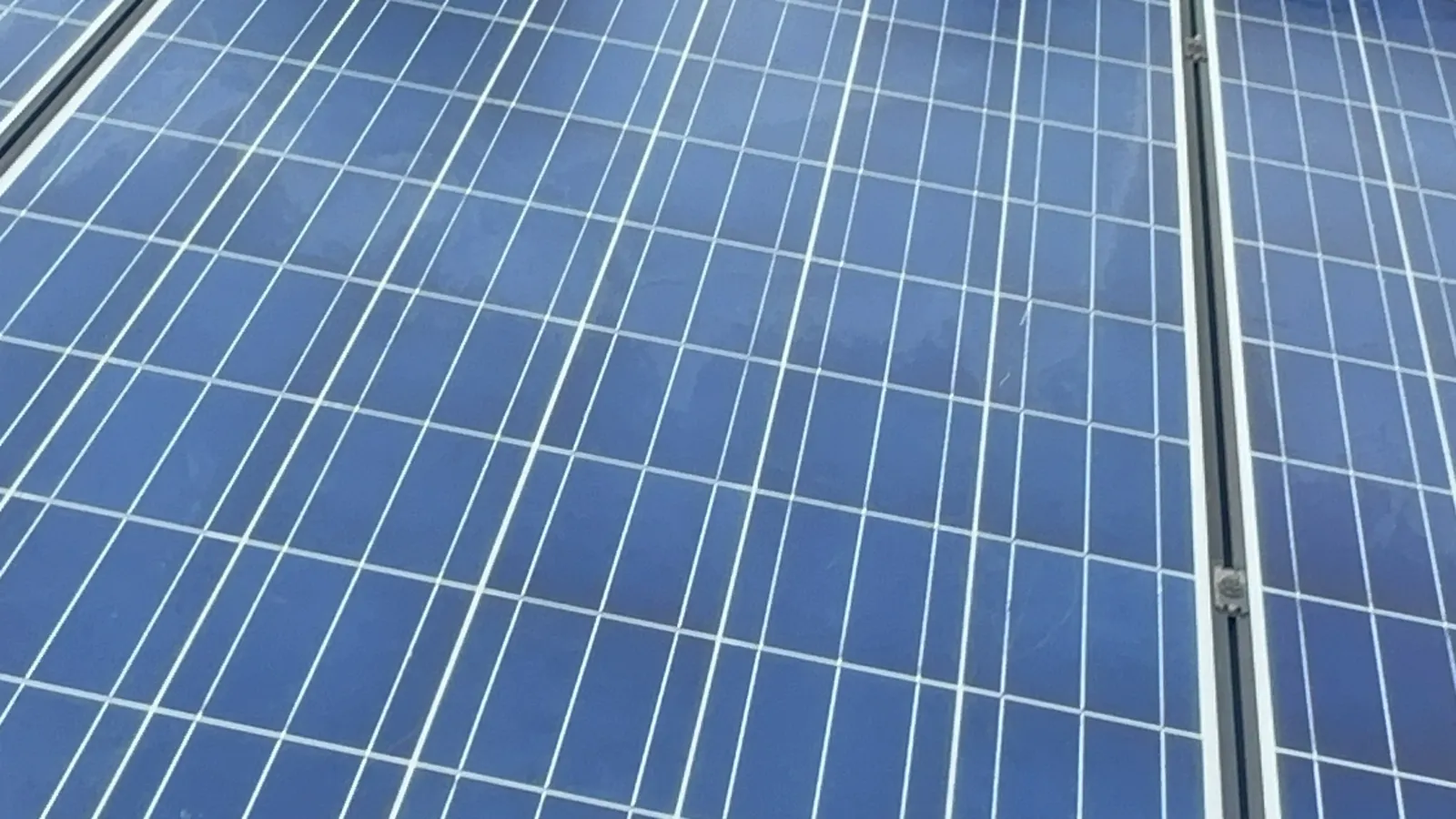
Yes, cleaning solar panels can increase output, but how much depends on how dirty they are and what is causing the buildup. Here is an honest look for Long Island homeowners.
- Clean panels can recover output lost to dirt, pollen, moss and bird droppings, but the gain is usually modest for light dust and larger for heavy buildup.
- Long Island's tree cover, salt air and pollen seasons all leave residue that plain rain does not always rinse away.
- Localized shading from droppings or leaves hurts more than an even coat of dust because it can drag down a whole panel string.
- Watch your monitoring app for a steady drop in production as your first sign that a cleaning may be worth it.
- Professional cleaning uses deionized water and soft methods that protect the glass, the seals and your warranty.
The short answer: yes, but the size of the gain varies
Solar panels make electricity from sunlight, so anything sitting on the glass that blocks that light will lower output. When you clean panels that are genuinely dirty, you remove that barrier and production goes back up. That part is simple physics, not marketing.
The honest nuance is how much you gain. For a thin, even layer of dust, most homeowners see a small recovery, often in the low single digits as a percentage. For panels coated in pollen, caked with pollen paste after a wet spring, streaked with bird droppings, or shaded by moss along the bottom edge, the loss can be much larger, and cleaning recovers a meaningful chunk of it. The dirtier the panel, the bigger the payoff from cleaning it.
So the useful question is not really "does cleaning help," but "how dirty are my panels right now, and what is causing it?" On Long Island, the answer changes with the seasons and with where your home sits.
Why localized dirt hurts more than an even coat of dust
A light film of dust spread evenly across the array dims every cell a little. That is real, but it is gentle. The bigger problem is localized blockage: a splash of bird droppings, a clump of wet leaves, a patch of moss, or a smear of tree sap over just a few cells.
Panels are wired so that cells and panels work together in strings. When one spot is heavily shaded, it can act like a kink in a hose and hold back the flow for the cells or the panel connected to it, not just the shaded patch. That is why a single well-placed dropping can cost you more production than a whole panel's worth of thin dust.
This is also why bypass diodes exist inside panels to limit the damage, but they do not erase it. The practical takeaway for a homeowner is that concentrated grime is worth removing promptly, while an even light haze is less urgent.
What actually dirties panels on Long Island
Long Island puts a specific set of things on your roof. On the North Shore, heavier tree cover means more leaf litter, more shade-loving moss and algae, and sticky pollen and sap dropping onto panels through spring and fall. Homes tucked under mature oaks and maples tend to collect the most, especially on lower-pitch sections where debris settles instead of sliding off.
On the South Shore and near the bays and ocean, salt air is the quiet culprit. Fine salt mist settles on glass and, mixed with humidity, leaves a haze that dust then sticks to. Coastal homes also see more bird activity, which means more droppings on exposed arrays.
Across both counties, spring pollen is the big seasonal event. A yellow-green film blankets everything for weeks, and if it gets rained on and then bakes in the sun, it can harden into a stubborn layer. Add winter, when snow melts and refreezes and leaves gritty residue behind, and you have a year-round cycle rather than a one-time problem.
Doesn't rain clean them for me?
Rain helps, and it is your best free maintenance. A good downpour rinses off loose dust and some pollen, especially on steeper roof pitches where water sheets off quickly. If your panels are steep and you live away from heavy tree cover, rain may keep them clean enough most of the year.
But rain has real limits. It does not remove bird droppings, sap, or moss, and it can actually make pollen worse by turning a dry film into a paste that dries into a crust. Rain also tends to leave its own residue as it evaporates, particularly where salt air is in the mix, so the glass is rarely truly spotless afterward.
The pattern most Long Island homeowners land on is that rain handles the everyday dust, but the sticky, stubborn, and localized stuff needs a real cleaning once or twice a year to keep output where it should be.
How to tell your panels need cleaning
Your best tool is the monitoring app that came with your system. Compare production on sunny days across similar weeks and seasons. A gradual, unexplained slide in output on clear days, when the weather and season would predict strong numbers, is a classic sign that grime is building up. A sudden drop can point to a localized blocker like droppings or a fallen branch.
You can also just look, safely from the ground with binoculars or from an upstairs window. Visible streaking, a yellow pollen haze, white bird droppings, or green moss and dark staining along the lower edges all tell you it is time. Spring, right after pollen season, and fall, after leaves come down, are the two moments most homeowners notice the biggest difference.
If your production has dropped and the panels look clean, the issue may be electrical rather than dirt, and that is a conversation for your installer. Cleaning fixes dirt, not wiring or a failing component.
The right way to clean, and why DIY can backfire
Solar glass is tougher than it looks, but the coatings, seals and frames around it are not indestructible. The safe method uses soft brushes or microfiber, low pressure, and purified or deionized water that dries without leaving mineral spots. Harsh detergents, abrasive pads, and especially a pressure washer aimed at the panels can scratch the surface, force water past the seals, and void parts of your warranty.
There is also the roof itself. Climbing a wet, sloped Long Island roof, often two stories on a colonial or a steep cape, is where most homeowner injuries happen. Add the fact that panels perform best cleaned early or late when the glass is cool, and the safest, most effective approach for most people is to hire a pro who already has the ladders, harnesses and the right water system.
This is the kind of exterior work Premium Services handles across Nassau and Suffolk, using panel-safe methods so you get the output back without risking the glass, the seals, or yourself. If you would rather not think about it twice a year, a local pro on a simple schedule is the easy path.
Is it worth the money?
Professional residential solar panel cleaning on Long Island typically runs in the low-to-mid hundreds of dollars for a standard home array, and the price is driven by a few real factors: how many panels you have, how steep and how high the roof is, how accessible the array is, and how dirty the panels are. A single-story ranch with easy access sits at the low end; a steep two-story roof with a large array sits higher.
Whether it pays off depends on how much output you were actually losing. If heavy pollen, moss or droppings were dragging your production down noticeably, one cleaning can recover enough electricity over the following months to offset a good part of the cost, while also protecting the panels from long-term staining and moss growth. If your panels were only lightly dusty, the direct dollar return is smaller and the main benefit is peace of mind and upkeep.
A reasonable rule of thumb for most Long Island homes is a cleaning once or twice a year, timed after pollen season and after leaf fall, plus a spot cleaning any time the app shows an unexplained dip. For an exact number, a local pro can look at your roof and array and quote it directly.
Frequently asked questions
For most homes, once or twice a year works well: once after spring pollen season and once after fall leaf drop. Homes under heavy tree cover or near the coast may benefit from an extra cleaning, and any unexplained dip in your monitoring app is a good trigger to check.
A gentle rinse with a garden hose from the ground can help with loose dust, but never use a pressure washer, which can crack cells, force water past the seals and void your warranty. Skip harsh soaps and abrasive pads, and avoid climbing a wet, sloped roof.
It depends on how dirty the panels are. Light, even dust usually returns a small single-digit percentage, while heavy pollen, moss or bird droppings can cause larger losses that a cleaning recovers more meaningfully. The dirtier the panels, the bigger the gain.
If the drop is from dirt, pollen, moss or droppings, yes. If the panels look clean but production is still low, the cause may be electrical or a failing component, which is a conversation for your installer rather than a cleaning.
It can. Moss, algae and bird droppings left in place can stain the glass, hold moisture and creep into gaps over time, and pollen that bakes on repeatedly gets harder to remove. Regular cleaning keeps both the output and the panels themselves in better shape.
Rather leave it to the pros?
Premium Services covers all of Long Island. Free, no-obligation estimate.