A practical, local guide to how often Long Island homeowners should clean their gutters, the warning signs to watch for, and what really drives the frequency and the price.
- Twice a year (late spring and late fall) is the baseline for most Long Island homes.
- Heavy tree cover on the North Shore often means three or four cleanings a year.
- South Shore salt air and humidity speed up corrosion and clogging, so do not skip inspections.
- Overflowing water, sagging sections, and plants growing in the trough are signs you are overdue.
- Clogged gutters cause fascia rot, basement flooding and ice dams, all far pricier than a cleaning.
The short answer: twice a year for most homes
For a typical Long Island home, the baseline is cleaning your gutters twice a year: once in late spring after the pollen, buds and seed pods drop, and once in late fall after the leaves have finished coming down. This two-pass rhythm handles the two big debris seasons our climate throws at you and keeps water moving away from the roof and foundation.
That said, twice a year is a starting point, not a rule that fits every property. The right number for your house depends on how many trees hang over your roof, which shore you live on, the style and pitch of your roof, and whether you have gutter guards. Some homes are perfectly fine on two cleanings. Others, especially wooded lots on the North Shore, realistically need three or four to stay ahead of clogs.
North Shore vs South Shore: why location changes the math
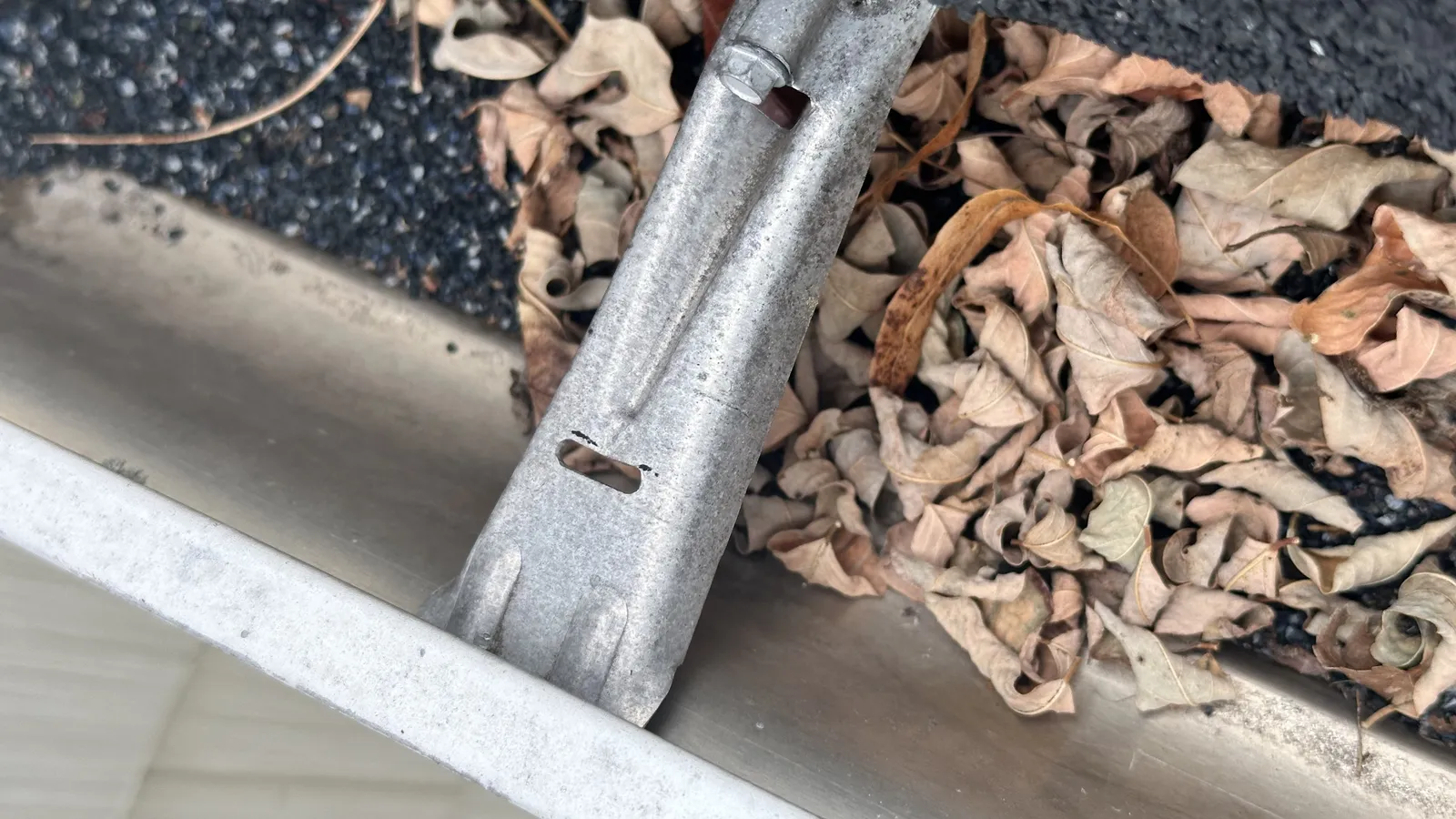
The North Shore is heavily wooded, with mature oaks, maples and pines shading a lot of the older homes. All that canopy is beautiful, but it also drops leaves, twigs, acorns and pine needles straight into your gutters. On top of that, the shade holds moisture, which encourages moss and organic sludge to build up in the troughs. If your roof sits under a tree line, plan on three cleanings a year at minimum, and inspect after every big storm.
The South Shore has fewer large trees near the water but brings its own challenge: salt air and high humidity. Salt accelerates corrosion on older aluminum and steel gutters and fasteners, and the damp climate lets debris turn into a heavy, packed mush that clogs downspouts. Homes closer to the bays and the ocean should not skip their inspections, because a gutter that looks fine from the ground can be quietly rusting at the seams and pulling loose from the fascia.
Wherever you are, nor'easters are the wild card. A single strong coastal storm can strip a season's worth of debris onto your roof in an afternoon, so it is smart to check your gutters after any major wind or rain event rather than waiting for the calendar.
The four seasons and your gutter calendar
Spring is the first key window. Trees drop pollen, buds, samaras (those helicopter seeds) and small flowers that mat together and block downspouts right as the spring rains arrive. A late-spring cleaning clears that out and lets you spot any damage from the winter freeze.
Fall is the second and most important window. Long Island's leaf drop typically runs from October into late November, and clearing too early means you will just fill up again. The sweet spot is late fall, after the bulk of the leaves are down but before the first hard freeze. Getting this cleaning done matters because clogged gutters going into winter are the number one cause of ice dams.
Summer and winter are mostly watch-and-inspect seasons. In summer, keep an eye out after thunderstorms and check that seedlings are not sprouting in the troughs. In winter, look for ice buildup at the roof edge and icicles hanging from the gutter line, both of which signal that water is not draining the way it should.
Signs your gutters are overdue right now
You do not always have to wait for the calendar. There are clear, visible signs that your gutters need attention now. The most obvious is water spilling over the front edge during rain instead of running to the downspout. If you see a curtain of water, the trough is blocked.
Other red flags include sections that sag or pull away from the fascia, visible plants or grass sprouting from the gutter, staining or peeling paint on the siding directly below the gutter line, and pooling water around your foundation after a storm. Inside, a damp or flooding basement after heavy rain is often traced straight back to overflowing gutters dumping water against the foundation wall.
Pests are another tell. Standing water and rotting leaves in a clogged gutter are a magnet for mosquitoes, and the damp debris attracts birds, squirrels and insects looking to nest. If you notice more activity around your roofline than usual, it is worth a look.
Do gutter guards change how often you clean?
Gutter guards help, but they are not a set-it-and-forget-it solution, and any company that tells you otherwise is overselling. Good guards keep out leaves and larger debris, which can stretch your cleaning interval and reduce clogs. On a heavily wooded North Shore lot, that difference is real and worth it.
The catch is that fine debris still gets through. Pollen, shingle grit, pine needles and roof runoff sediment can build up on top of the guards or slip underneath them, and organic film can grow on the mesh over time. Most guarded homes still need a professional check once a year to clear the surface, flush the downspouts and confirm nothing is quietly backing up where you cannot see it.
If you have guards, the honest recommendation is to shift from frequent full cleanings to an annual inspection plus a lighter clearing as needed. You will still want eyes on the system, especially heading into winter when a hidden clog can trigger an ice dam.
What it costs, and why skipping it costs more
For a typical single-story or two-story Long Island home, professional gutter cleaning usually runs in a range of roughly 150 to 350 dollars per visit, with larger, taller or more complex homes landing higher. The price is driven by the linear footage of gutter, the number of stories and the roof pitch, how much debris has accumulated, and safety factors like steep sections or hard-to-reach runs over decks and landscaping. Homes that have not been cleaned in a long time often cost more the first time simply because there is more to haul out.
It is tempting to stretch the interval to save money, but clogged gutters quietly cause the expensive problems. Overflowing water rots the fascia and soffit, seeps behind the siding, floods basements, cracks foundations over time, and in winter causes ice dams that back water up under your shingles. Any one of those repairs can cost many times a year of routine cleanings.
Because it is exterior work at height, gutter cleaning is also one of the jobs most worth handing to a licensed and insured local crew rather than climbing a ladder yourself. Premium Services is a licensed and insured Long Island company that handles gutter cleaning across Nassau and Suffolk, and booking a seasonal visit is a simple way to stay ahead of all of this. You can reach the team at (934) 500-2940.
Frequently asked questions
For many homes, yes, with cleanings in late spring and late fall. But if you have heavy tree cover or lots of pines nearby, plan on three or four times a year to stay ahead of clogs.
Late fall, after most leaves have dropped but before the first hard freeze, is the single most important cleaning because it prevents winter ice dams. A late-spring cleaning is the strong second.
Yes. Guards reduce debris and stretch the interval, but fine material like pollen, grit and pine needles still gets through, so an annual professional inspection and flush is recommended.
Most homes fall in a range of roughly 150 to 350 dollars per visit. The price depends on your home's size and height, the roof pitch, how much debris has built up, and how accessible the gutters are.
Water overflows and causes fascia rot, siding damage, basement flooding, foundation cracks and winter ice dams. These repairs cost far more than routine cleaning, and clogged gutters also attract pests.
Rather leave it to the pros?
Premium Services covers all of Long Island. Free, no-obligation estimate.
Roof & Gutters near you
Get it done by a local, licensed team.