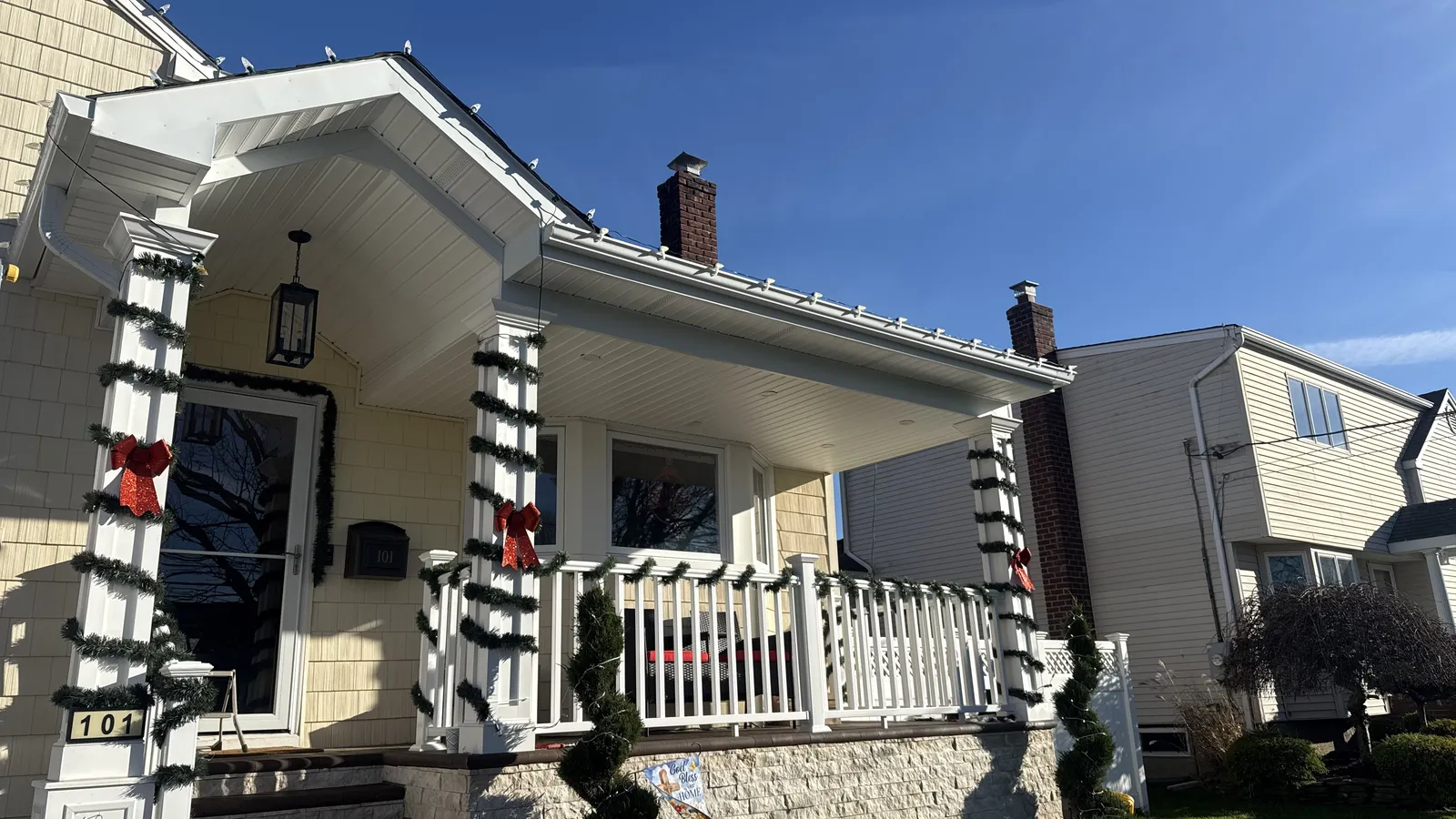
On Long Island the smart window for Christmas lights is narrow: hang them before the hard freeze, take them down before ice and salt air do damage. Here is the timing that actually works.
- The sweet spot to hang lights on Long Island is early-to-mid November, while the weather is still mild and the roof is dry.
- Aim to install before the first hard freeze (often mid-to-late November) so you are not on a ladder over ice.
- Leave lights up through New Year's, then plan removal for the first dry, calm stretch in January.
- Do not let lights stay up past February. Salt air, nor'easters, and ice shorten their life and can damage your roof.
- Professional installation typically runs a few hundred to well over a thousand dollars depending on roofline size and design.
The best time to put up Christmas lights on Long Island
For most Long Island homeowners, the ideal window to hang Christmas lights is the first two or three weeks of November. The weather is still mild, daylight is decent, and the roof and gutters are usually dry. You want to be on that ladder while conditions are forgiving, not fighting wind off the bay or a slick North Shore roof in December.
There is no rule that lights have to be turned on right away. Plenty of neighbors in Nassau and Suffolk install in early November and simply wait until after Thanksgiving to light them up. That way the hard work is done during good weather, and you get to enjoy the display without a last-minute scramble on a cold weekend.
If you wait until the week before Christmas, you are competing with everyone else, the good weather windows are gone, and any pro installer in the area is fully booked. Booking early, whether you do it yourself or hire out, is the single biggest favor you can do for future you.
Watch the weather, not just the calendar
The calendar tells you the season, but the weather tells you the safe day. On Long Island the first hard freeze often lands in mid-to-late November, and once frost settles on a roof, shingles and gutters turn dangerous. Pick a dry morning when temperatures are above freezing and the wind is calm. Late morning is usually best, after any overnight dew or frost has burned off.
Coastal weather adds its own wrinkle. South Shore homes near the water deal with damp, salty air that makes surfaces slick and corrodes clips and connectors faster. North Shore properties with heavy tree cover often have shaded, mossy roof sections that stay wet and slippery long after the rest of the house has dried. Give those areas extra respect.
Never work on a roof or tall ladder in wind, rain, or right after a nor'easter. If the forecast is marginal, wait a day. A display is not worth a fall. This is exactly why many homeowners hand the rooftop and second-story runs to an insured local crew and keep the ground-level bushes and railings for themselves.
When to take down Christmas lights
Most people leave their lights up and lit through New Year's Day, which is a nice natural finish to the season. After that, there is no strict deadline, but the practical answer is simple: take them down at the first calm, dry stretch in January when the roof is not iced over. A mild January thaw is the perfect opportunity.
The real deadline is your climate, not tradition. Leaving lights up deep into February on Long Island exposes them to repeated freeze-thaw cycles, ice buildup, heavy snow load, and constant salt air. All of that shortens the life of the strands, corrodes the clips, and can loosen or damage gutters and shingles where the lights are anchored.
If January turns brutal and you simply cannot get up there safely, that is a fair reason to wait for a better day or to call a pro for removal. What you do not want is to still have brittle, ice-crusted strands hanging in March. Set a reminder for mid-January so removal does not quietly slide into spring.
Why leaving lights up too long hurts your home
It is tempting to leave lights up all winter to avoid a second cold-weather climb, but Long Island winters punish that decision. Ice that forms and melts along the roofline can pull clips loose, and strands frozen into ice are easy to snap when you finally tug them free. Salt-laden air on the South Shore accelerates corrosion on every metal contact point.
There is also a wear issue that has nothing to do with weather. Sunlight breaks down the plastic insulation on light strands over months of exposure. A set left up from November through March ages far faster than one that comes down in January, so year-after-year procrastination quietly costs you new lights sooner.
For the house itself, the biggest risks are at the anchor points. Clips forced off frozen gutters can bend or crack them, and staples or nails left in fascia and shingles create entry points for water. Timely removal, on a dry day with the right clips, protects both your lights and your roofline.
How much does professional light installation cost?
Pricing varies a lot, so treat any single number with caution. As a realistic range, professional Christmas light installation on Long Island typically runs from a few hundred dollars for a modest single-story roofline up to well over a thousand for a large home with extensive roof runs, trees, and custom design. Most quotes bundle design, installation, takedown, and sometimes storage into one seasonal price.
The main drivers are simple: how many linear feet of roofline and railing you want covered, the height and steepness of the roof, how many trees and shrubs are included, and whether you supply the lights or the company provides commercial-grade strands. Steep North Shore roofs and hard-to-reach peaks cost more because they take longer and require more safety gear.
When you compare quotes, ask what is included. A good local company like Premium Services will spell out whether the price covers custom-fit strands, mid-season maintenance if a section fails, removal after the holidays, and off-season storage. Those extras are often what separates a cheap quote from a genuinely good value.
A simple timeline for the season
Here is a clean plan that works for most Long Island homes. In October, test your strands indoors and replace any that flicker or have cracked insulation, and book your installer if you plan to hire out. In early-to-mid November, install on a dry, mild day and secure everything with proper clips, no staples or nails through shingles.
From Thanksgiving through New Year's, enjoy the display and use an outdoor-rated timer so lights run a set schedule instead of all night. After the new year, watch for the first calm, dry January day, take everything down before ice and salt do damage, coil the strands loosely, and store them somewhere dry and rodent-free.
If any part of that plan means standing on a steep roof, a second-story ladder, or an icy surface, that is the moment to call a licensed and insured local crew instead. Premium Services handles installation and takedown across Nassau and Suffolk, so the risky heights are covered while you keep the parts you actually enjoy. You can reach the team at (934) 500-2940.
Frequently asked questions
Cold itself is not the problem, but ice, frost, and wind are. On Long Island it is much safer to install on a dry, mild day in November before the first hard freeze, rather than fighting a slick, frozen roof in December.
Most homeowners keep them up through New Year's and remove them in January. Try not to leave them past February, since Long Island's freeze-thaw cycles, snow load, and salt air degrade the strands and can damage gutters and shingles.
Yes. Leaving them up year-round means constant sun, ice, and salt exposure that ages the strands quickly and stresses your roofline. Timely removal protects both the lights and the anchor points on your home.
No. Staples and nails pierce shingles and fascia and invite water damage. Use plastic gutter and shingle clips designed for light strands, which hold securely and come off cleanly at the end of the season.
The main reason is safety on steep roofs, tall ladders, and icy surfaces, which cause serious falls every winter. A licensed and insured local crew also handles design, custom-fit strands, takedown, and storage, so you skip the risk and the hassle.
Rather leave it to the pros?
Premium Services covers all of Long Island. Free, no-obligation estimate.