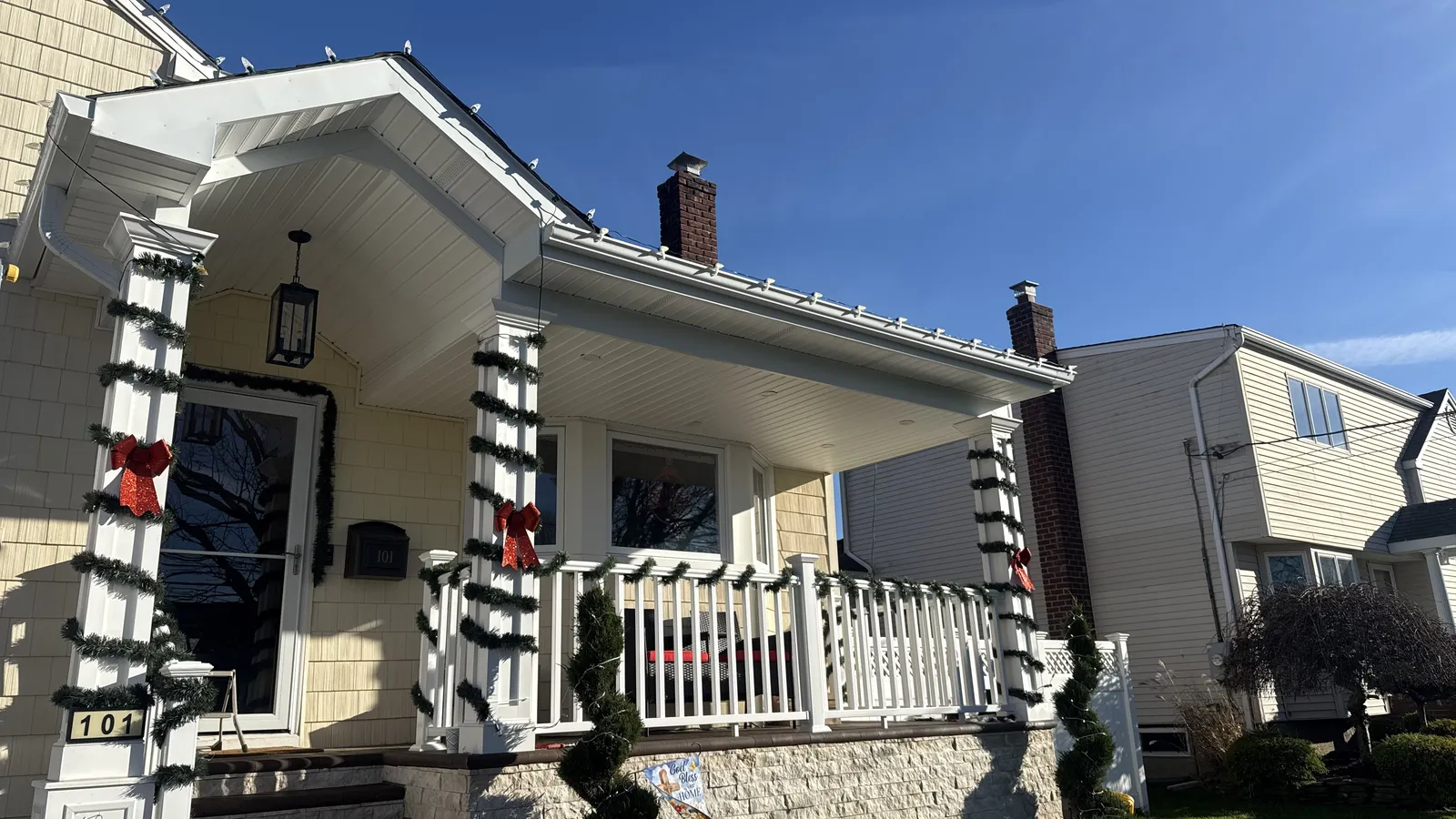
A practical, honest comparison of doing your own Christmas lights versus hiring a professional installer, written for Nassau and Suffolk County homeowners who deal with steep roofs, salt air and nor'easters.
- DIY saves money up front but costs time and carries real ladder and roof risks, especially on steep or two-story Long Island homes.
- Pros typically bring commercial-grade lights, custom-fit measuring, safe access and take-down plus storage, often for a seasonal package.
- Ladder falls spike every holiday season, and icy North Shore roofs and slick South Shore humidity make winter climbs riskier.
- Expect professional installs to run roughly a few hundred to over a thousand dollars depending on roofline, height and light count.
- The right choice depends on your roof height, your free time, your comfort on ladders and how polished you want the result.
The real question: what are you actually comparing?
When people ask whether to do their own Christmas lights or hire a pro, they usually think it is only about price. It is really about four things: money, time, safety and the quality of the finished look. DIY almost always wins on up front cost. A professional usually wins on time, safety and that clean, evenly spaced look you see on the nicest houses in your neighborhood.
On Long Island the decision is shaped by your specific home. A single-story ranch in Levittown with a low roofline is a very different job from a two-story colonial in Huntington with steep gables and tall trees. The taller and steeper the roof, the more the safety and time factors tilt toward hiring help. Be honest about your own house before you decide.
The case for doing it yourself
DIY makes the most sense when your home is low and simple to reach, when you enjoy the project, and when you already own decent lights and a stable ladder. If you can hang most of your display standing on the ground or on the first rung, the risk drops sharply and you save the full labor cost. Many homeowners genuinely like the tradition of putting the lights up as a family weekend.
The savings are real. You are paying only for materials, and good LED strings last many seasons if you store them well. Over several years a DIY setup you reuse can be far cheaper than paying for install every December. The tradeoff is your time, usually a full day or a weekend once you factor in testing bulbs, untangling strings, measuring runs and fixing the section that will not light.
DIY also gives you full creative control. You can experiment, change the design year to year, add a section on a whim, and fuss over the details as long as you like. If the process is part of the fun for you, that value does not show up on any quote.
The case for hiring a professional
A professional installer earns their fee in three places: access, quality and convenience. They bring tall ladders, sometimes lifts, and the training to work safely on steep and high rooflines that most homeowners should not climb in December. On a two-story Long Island colonial, that access alone is worth a lot.
The finished look is usually noticeably better. Pros measure your roofline, cut strings to fit each run, hide the wires along the gutter line, and use clips instead of staples or nails so nothing damages your fascia. The result is that even, gap-free glow along the roof edge that is hard to get by hand when you are balancing on a ladder in the cold.
Most importantly, a full-service company handles the whole season. They install, they come back to fix any outages, they take everything down after the holidays, and many will store your lights until next year. For a busy family, trading a full weekend of cold, fiddly work for a single scheduled visit is often the entire point. Premium Services, based here on Long Island, offers exactly this kind of install, maintain and take-down package.
Safety: the factor people underestimate
This is the part worth taking seriously. Every holiday season, emergency rooms see a spike in falls from ladders and roofs tied to decorating. A slip from even one story can cause a serious injury. Christmas lights go up in the coldest, darkest, most slippery weeks of the year, which is exactly when climbing is most dangerous.
Long Island adds its own hazards. On the North Shore, heavy tree cover means damp, mossy, shaded roofs that stay slick, and early cold snaps can leave a thin glaze of ice you cannot see. On the South Shore, salt air and humidity keep surfaces damp, and a gusty day off the water can catch you off balance on a ladder. A nor'easter can blow in fast, so timing your install for a dry, calm, above-freezing day matters.
If your plan involves being on a second-story roof edge, on a steep pitch, or reaching over gutters from a tall extension ladder, that is the strongest single reason to hire a pro. No holiday display is worth a fall. If you do climb, use a spotter, a stable ladder on solid ground, three points of contact, and never go up on a wet, windy or icy day.
What a professional install actually costs
There is no single price, but here is a realistic picture. Many professional Christmas light installs on Long Island fall somewhere between a few hundred dollars for a modest single-story roofline and well over a thousand dollars for a large two-story home with extensive rooflines, trees and landscaping lit up. Most companies quote per project after seeing your home, or price by the linear foot of roofline plus any trees, bushes and wraps.
The main things that drive the price are the length of roofline you want covered, the height and pitch of the roof, how many stories, the number of trees or shrubs included, and whether you supply the lights or the company provides commercial-grade product. Packages that include take-down and storage cost more up front but save you the second job in January and the closet space all year.
One useful way to think about it: the first year with a pro is the most expensive because you may be paying for the lights too. In later years, if the same company reuses and stores your product, the seasonal cost can settle into a more predictable range. Always get a written quote, confirm the company is licensed and insured, and ask exactly what the price includes: install, mid-season fixes, take-down and storage.
A quick way to decide
Lean toward DIY if your home is one story or has a low, easy-to-reach roofline, you own a stable ladder and decent lights, you enjoy the project, and you have a free weekend to give it. If most of your display can go up from the ground or low on a ladder, the math and the risk both favor doing it yourself.
Lean toward hiring a pro if your home is two stories or has steep pitches, if the idea of a December roof climb makes you nervous, if you want that clean, custom-fit look, or if your time is scarce during the holidays. Also lean pro if you would rather never handle take-down and storage. For a lot of Long Island families, the deciding factor is simply not wanting to be on a ladder over a frozen driveway in the dark.
Whichever way you go, plan early. The best dry, calm installation days fill up fast, and reputable installers book out weeks ahead in November and early December. If you decide to hire, getting a quote in autumn gives you the best pick of dates before the first nor'easter of the season.
Frequently asked questions
Yes, up front. DIY means you only pay for materials, and good lights reused over several seasons lower the cost even more. You are trading money for your time and for taking on the ladder work and take-down yourself.
It typically ranges from a few hundred dollars for a small single-story roofline to over a thousand for a large two-story home with trees and extensive rooflines. Most companies quote per project after seeing your home, and price depends on roof height, roofline length and light count.
Many full-service companies do, often as part of a seasonal package. Take-down after the holidays and off-season storage are common add-ons, so ask exactly what is included before you book.
It can be. Falls from ladders and roofs rise every holiday season, and Long Island's damp, mossy North Shore roofs and humid, salty South Shore surfaces get slick and can hide thin ice. If your roof is steep or two stories, hiring a pro is the safer choice.
Plan in autumn. Good dry, calm install days and reputable installers book out weeks ahead through November and early December, so an early quote gets you the best dates before winter storms roll in.
Rather leave it to the pros?
Premium Services covers all of Long Island. Free, no-obligation estimate.